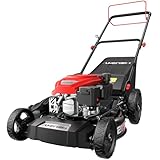
Ever found yourself staring at a sprawling lawn, dreaming of the perfect cut, but then the language barrier hits? You’re not alone! Understanding how to say ‘lawn mower’ in Spanish is a common query for gardeners, travelers, or anyone interacting with Spanish-speaking communities about yard work.
Whether you’re trying to ask for help, purchase a new machine, or simply understand instructions, knowing the right term is crucial. So, let’s get straight to the point: the most common way to say ‘lawn mower’ in Spanish is ‘cortacésped’.
But is that the only term? Does it vary by region? We’re going to explore the nuances, give you plenty of context, and ensure you’re equipped with the confidence to use the right Spanish word for this essential gardening tool.
Understanding ‘cortacésped’: The Primary Term
The word ‘cortacésped’ is derived from two Spanish words: ‘cortar’ (to cut) and ‘césped’ (lawn or grass). Literally, it means ‘grass cutter’. This is the most widely understood and used term across the Spanish-speaking world for a machine designed to cut grass. You’ll see it in product manuals, hear it from hardware store employees, and find it in general conversation.
Regional Variations and Alternatives
While ‘cortacésped’ is king, the beauty of language lies in its diversity! Depending on the specific country or even region within a country, you might encounter other terms. It’s always good to be aware of these, as using a local term can sometimes make you sound more natural or avoid confusion.
‘podadora’ – a Common Contender
Another very common term, especially in Latin America, is ‘podadora’. This word comes from ‘podar’, which means ‘to prune’ or ‘to trim’. While ‘podar’ often refers to trimming trees or bushes, in the context of lawn care, ‘podadora’ is frequently used interchangeably with ‘cortacésped’.
Think of it this way: ‘cortacésped’ is a direct description of its function (cutting grass), while ‘podadora’ is more about the action it performs (trimming/cutting). Both are perfectly valid and understood.
Less Common, but Still Relevant Terms
You might also stumble upon a few other less frequent terms: (See Also: How to Remove Thatch From My Lawn: Your Ultimate Guide)
- ‘Máquina de cortar césped’: This is a more descriptive phrase, literally meaning ‘machine for cutting grass’. It’s perfectly correct but longer and less common than the single-word alternatives.
- ‘Segadora’: This term is more often associated with larger agricultural machines used for harvesting hay or grain, but in some contexts, particularly for older or larger rotary mowers, it might be used. However, for your average backyard lawn mower, ‘cortacésped’ or ‘podadora’ are safer bets.
Context Is Key: When to Use Which Term
So, how do you choose? Generally, you can’t go wrong with ‘cortacésped’. It’s the most neutral and universally understood term. If you’re in Mexico, Argentina, or many other parts of Latin America, ‘podadora’ will also be readily understood and perhaps even more commonly used by locals.
If you’re unsure, starting with ‘cortacésped’ is always a safe bet. If the person you’re speaking with uses ‘podadora’, you can simply adopt their term for the remainder of your conversation.
Putting It Into Practice: Useful Phrases
Knowing the word is one thing, but using it in a sentence is another! Here are some practical phrases you might find helpful:
Asking for a Lawn Mower
- “¿Dónde puedo comprar un cortacésped?” (Where can I buy a lawn mower?)
- “¿Tienen podadoras en esta tienda?” (Do you have lawn mowers in this store?)
- “Estoy buscando un cortacésped eléctrico.” (I am looking for an electric lawn mower.)
- “¿Cuál es el precio de esta podadora?” (What is the price of this lawn mower?)
Talking About Lawn Mowing
- “Necesito cortar el césped.” (I need to cut the grass.)
- “Voy a usar el cortacésped este fin de semana.” (I am going to use the lawn mower this weekend.)
- “Mi podadora no arranca.” (My lawn mower won’t start.)
- “¿Me puedes prestar tu cortacésped?” (Can you lend me your lawn mower?)
Specific Types of Lawn Mowers
Just like in English, Spanish has terms for different types of lawn mowers:
| English Term | Spanish Term (Common) | Notes |
|---|---|---|
| Push Mower | Cortacésped manual / Podadora manual | Refers to a mower you push yourself. |
| Self-Propelled Mower | Cortacésped autopropulsado / Podadora autopropulsada | The mower moves forward on its own. |
| Riding Mower / Lawn Tractor | Tractor cortacésped / Tractor podador | A mower you sit on and drive. |
| Robotic Mower | Cortacésped robotizado / Podadora robotizada | An automated mowing device. |
| Electric Mower | Cortacésped eléctrico / Podadora eléctrica | Powered by electricity. |
| Gas/Petrol Mower | Cortacésped de gasolina / Podadora de gasolina | Powered by gasoline. |
| Reel Mower | Cortacésped de tambor / Cortacésped helicoidal | Uses a rotating cylinder of blades. |
| Rotary Mower | Cortacésped de cuchilla rotatoria | Uses a single blade that spins horizontally. (Most common type) |
Understanding Related Terms
Beyond the mower itself, you might encounter other vocabulary related to lawn care:
- El césped: The lawn or grass.
- Cortar el césped: To cut the grass (the action).
- El jardín: The garden.
- La hierba: Grass (can also refer to weeds).
- Las herramientas de jardín: Gardening tools.
- El mantenimiento del jardín: Garden maintenance.
A Deeper Dive Into Regional Differences
While we’ve touched on regional variations, it’s worth emphasizing that language is fluid and evolves. What might be standard in one city could be less common in another, even within the same country. However, for ‘lawn mower’, the primary contenders remain ‘cortacésped’ and ‘podadora’.
Spain vs. Latin America
In Spain, ‘cortacésped’ is overwhelmingly the most common and preferred term. You’ll find it in shops, advertisements, and hear it in everyday conversation. While ‘podadora’ might be understood, it’s less likely to be the first word that comes to mind for a typical lawn mower. (See Also: Master ‘how to Remove a Lawn Tractor Tire’ Safely & Easily)
In much of Latin America, both ‘cortacésped’ and ‘podadora’ are widely used. Some countries might lean more towards one than the other. For example:
- Mexico: Both are common, but ‘podadora’ might be slightly more prevalent in casual conversation.
- Argentina: ‘Cortacésped’ is very common, but ‘podadora’ is also understood and used.
- Colombia: ‘Podadora’ is frequently used.
- Chile: ‘Cortacésped’ is generally the standard.
This isn’t an exhaustive list, and there can be local preferences. The key takeaway is that using either ‘cortacésped’ or ‘podadora’ will likely get your message across effectively in most Spanish-speaking regions when referring to a lawn mower.
When in Doubt, Listen and Adapt
The best strategy when you’re in a new Spanish-speaking environment and need to talk about lawn mowers is to listen to how the locals refer to them. If you ask someone, “¿Cómo se dice lawn mower en español?” (How do you say lawn mower in Spanish?), they will likely provide you with their preferred local term. Once you hear it, try to use it yourself!
The Importance of Pronunciation
Getting the pronunciation right can make a big difference:
- Cortacésped:
- ‘Cor-tah-THESP-ed’ (in Spain, the ‘c’ before ‘e’ sounds like ‘th’)
- ‘Cor-tah-SEP-ed’ (in Latin America, the ‘c’ before ‘e’ sounds like ‘s’)
- The accent is on the second ‘e’ (the ‘e’ in ‘césped’).
- Podadora:
- ‘Po-dah-DOH-rah’
- The accent is on the ‘o’ in ‘dora’.
Don’t worry too much about perfect pronunciation right away. Native speakers are usually very understanding and appreciate the effort you’re making to speak their language.
Beyond the Basic: Related Vocabulary for Lawn Care Enthusiasts
If you’re serious about your lawn or engaging in more detailed conversations, here’s some extra vocabulary that might be useful:
Types of Mowing Actions
- Cortar a ras: To cut flush (level with the ground).
- Recortar: To trim (often used for edges or smaller areas).
- Ajustar la altura de corte: To adjust the cutting height.
Parts of a Lawn Mower
While not always necessary for a basic conversation, knowing parts can be helpful if you’re discussing repairs or specific features: (See Also: How to Turn Your Lawn Into a Putting Green: Your Dream…)
- La cuchilla: The blade.
- El motor: The engine.
- Las ruedas: The wheels.
- El manillar: The handle (for push mowers).
- El depósito de gasolina: The fuel tank.
- La bolsa de recolección: The collection bag.
- El chasis: The chassis or body.
Common Lawn Mower Problems (and How to Describe Them)
- No enciende: It doesn’t start.
- Hace un ruido extraño: It makes a strange noise.
- La cuchilla está desafilada: The blade is dull.
- Pierde aceite: It’s leaking oil.
- El cable está roto: The cable is broken (for electric mowers).
Cultural Nuances in Lawn Care
In many Spanish-speaking cultures, the concept of lawn care might differ slightly from what you’re used to. While pristine lawns are appreciated, the emphasis might be more on practicality and less on the hyper-manicured aesthetic sometimes seen in North America or parts of Europe. However, the tools and the need to maintain them remain universal.
If you’re in a region where lush, green lawns are common, you’ll certainly find a market for lawn mowers and related accessories. Understanding the local terminology will only enhance your experience, whether you’re a homeowner, a gardener, or simply curious.
Final Check: Which Term to Prioritize?
To reiterate, if you need to choose just one term to remember, make it ‘cortacésped’. It’s universally understood and the most direct translation. However, be prepared to hear and potentially use ‘podadora’, especially in Latin America. Both are excellent choices for asking how to say ‘lawn mower’ in Spanish.
Mastering these terms will undoubtedly make your interactions smoother, whether you’re shopping for a new machine, asking for directions to a garden center, or simply discussing yard work with a Spanish-speaking neighbor. Happy mowing, or as they say, ¡feliz corte de césped!
Conclusion
So, you’ve learned that the primary way to say ‘lawn mower’ in Spanish is ‘cortacésped’, derived from ‘to cut’ and ‘grass’. However, you’ll also frequently encounter ‘podadora’, particularly in Latin America, meaning ‘trimmer’ or ‘pruner’. Both are valid and widely understood terms for this essential gardening tool.
Remember to consider the region you’re in and don’t hesitate to listen to locals for their preferred terminology. With these key phrases and vocabulary, you’re well-equipped to discuss lawn care confidently in Spanish.
Recommended Products