Ever looked at your trusty lawn mower and thought, “I wish it had a little more oomph?” Or maybe you’re tired of the slow crawl across your yard. You’re not alone! Many lawn mower owners find themselves wondering if there’s a way to upgrade their machine’s performance. The good news is, there often is, and one of the most effective ways to do this is through a pulley swap.
This modification can dramatically alter your mower’s speed and power output, making those weekend chores feel less like a chore and more like a breeze. But like any mechanical task, it requires careful planning and execution. Don’t worry, we’re here to guide you through the entire process, from understanding why you’d want to do it to the nitty-gritty of the swap itself.
Understanding the Basics of Lawn Mower Pulleys
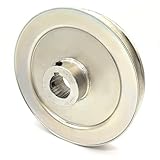
Before we dive headfirst into the ‘how-to,’ it’s crucial to grasp the fundamental role pulleys play in your lawn mower’s drivetrain. Think of them as the gears of your mower’s transmission system. They work in conjunction with belts to transfer rotational power from the engine to various components, like the blades, the drive wheels, and potentially a transmission or transaxle.
How Pulleys Affect Speed and Torque
The magic of pulley swaps lies in the ratio they create. A pulley’s diameter is key here. When you change the size of a pulley, you’re altering the speed at which the connected component spins relative to the engine’s RPM (Revolutions Per Minute).
- Larger Drive Pulley (on the transmission/axle): This will generally increase your mower’s top speed. The engine’s power is spread over a larger circumference, making the wheels turn faster for a given engine RPM. However, this often comes at the cost of torque (pulling power).
- Smaller Drive Pulley (on the transmission/axle): This will decrease your mower’s top speed but will increase its torque. This can be beneficial if you have a lot of hills or need more power to cut through thick grass.
- Larger Engine Pulley (on the engine crankshaft): This will decrease the speed of the belt and therefore the driven component. It effectively acts like a lower gear.
- Smaller Engine Pulley (on the engine crankshaft): This will increase the speed of the belt and the driven component. It acts like a higher gear.
Most pulley swaps aim to increase the drive pulley’s diameter (the one connected to the transmission or transaxle) to gain more speed. This is because the engine usually has plenty of power for typical mowing tasks, and the limiting factor for many users is the mower’s ground speed.
Why Would You Want to Pulley Swap Your Lawn Mower?
The primary motivations for undertaking a pulley swap are:
- Increased Ground Speed: This is the most common reason. If your mower feels sluggish and you spend too much time mowing, a pulley swap can significantly reduce your mowing time.
- Improved Torque (Less Common for Speed Swaps): While less common for speed-focused swaps, changing pulley sizes can also increase the mower’s ability to climb inclines or pull heavier loads, though this usually involves going to smaller drive pulleys or larger engine pulleys.
- Customization and Performance Tuning: For enthusiasts, it’s a way to fine-tune their machine for specific needs or simply to enhance its capabilities.
Assessing Your Lawn Mower’s Current Setup
Before you even think about buying new parts, you need to understand your mower’s current pulley system. This involves identifying the relevant pulleys and measuring them accurately.
Identifying the Key Pulleys
There are typically two main pulleys involved in the drive system:
- Engine Pulley (Input Pulley): This pulley is directly attached to the engine’s crankshaft. It’s usually the smaller of the two and dictates the speed at which the belt is driven.
- Drive Pulley (Output Pulley): This pulley is connected to the transmission or transaxle and ultimately drives the wheels. It’s often larger than the engine pulley.
You’ll also have a deck pulley system that drives your mower blades. For a speed swap, you’re generally focused on the engine pulley and the drive pulley. Modifying the deck pulleys would affect blade speed, which is usually not the goal for a ground speed increase.
Measuring Your Pulleys
Accurate measurements are critical. You’ll need a reliable measuring tool, like a caliper or a tape measure.
How to Measure:
- Diameter: Measure the widest point across the pulley, from outer edge to outer edge. For grooved pulleys, measure across the outer diameter of the grooves where the belt rides.
- Sheave Diameter: This is the diameter of the groove where the belt sits. For V-belts, this is the most important measurement.
- Belt Width: Note the width of the belt currently in use. This is important for ensuring compatibility with new pulleys. Common sizes are 1/2 inch or 5/8 inch.
Tip: Take clear photos of your current pulley setup. This will be invaluable when consulting parts diagrams or asking for advice. (See Also: How to Change Spark Plugs in Lawn Mower: Easy Diy Guide)
Understanding Your Mower’s Transmission/transaxle
Knowing what kind of transmission or transaxle your mower uses is also important. Is it a manual gearbox, a hydrostatic transmission (HST), or a CVT (Continuously Variable Transmission)? This can influence the type of pulleys you can use and the potential outcomes.
Calculating Your Current Ratio
Once you have your measurements, you can calculate your current pulley ratio. This is essential for determining how much you want to change it.
Formula:
Pulley Ratio = Diameter of Drive Pulley / Diameter of Engine Pulley
For example, if your drive pulley is 6 inches in diameter and your engine pulley is 3 inches in diameter, your ratio is 6 / 3 = 2:1. This means for every revolution of the engine pulley, the drive pulley rotates half a revolution.
Choosing the Right Pulleys for Your Swap
This is where you decide what kind of performance boost you’re aiming for. The goal is usually to increase the drive pulley diameter relative to the engine pulley, or decrease the engine pulley diameter relative to the drive pulley.
Determining Your Desired Ratio
Think about your current mower’s top speed. Do you want to double it? Triple it? Be realistic. Doubling your speed can put significant stress on other components like the transmission, belts, and even the frame. A common target is to increase top speed by 25-50%.
Let’s say your current ratio is 2:1 (6″ drive / 3″ engine). If you want to increase speed by about 30%, you’d aim for a new ratio of roughly 2.6:1.
Options for New Pulleys
You have a few routes to go:
- Larger Drive Pulley: This is the most straightforward approach for increasing speed. You’d keep your existing engine pulley and find a larger drive pulley that fits your transmission input shaft and can accommodate your belt.
- Smaller Engine Pulley: Less common for speed increases, but you could potentially find a smaller engine pulley. This would require careful consideration of belt length and alignment.
- Combination: Sometimes, a combination of slightly larger drive pulley and slightly smaller engine pulley might be necessary to achieve the desired ratio while maintaining proper belt tension and alignment.
Where to Find Replacement Pulleys
Finding the right pulleys can sometimes be the trickiest part. Here are some common sources:
- OEM Parts: Check with your lawn mower manufacturer’s parts department or authorized dealers. They might have larger pulley options for higher-trim models or as optional upgrades.
- Aftermarket Performance Parts Suppliers: Companies specializing in go-kart, ATV, or utility vehicle performance parts may carry universal pulleys that can be adapted.
- Industrial Supply Stores: Look for industrial-grade pulleys that match your required shaft size, diameter, and belt width.
- Online Retailers (Amazon, eBay, etc.): Search for terms like “lawn mower drive pulley,” “engine crankshaft pulley,” “sheave pulley,” and specify dimensions. Be very careful with dimensions and material quality here.
Important Considerations When Buying: (See Also: How High Should I Mow My Lawn? The Ultimate Guide)
- Shaft Diameter: The new pulley MUST match the diameter of your engine crankshaft or transmission input shaft.
- Belt Groove Profile: Ensure the groove profile (e.g., V-groove) matches your current belt.
- Material: Steel or heavy-duty aluminum pulleys are preferable for durability.
- Keyway: Most pulleys have a keyway to lock them onto the shaft. Ensure the new pulley has a compatible keyway.
- Set Screws: Some pulleys rely on set screws for mounting. Ensure they are robust.
The Pulley Swap Procedure: Step-by-Step
Safety first! Always disconnect the spark plug wire before starting any work on your mower to prevent accidental starting.
Step 1: Preparation and Safety
- Disconnect Spark Plug Wire: Pull the boot off the spark plug and secure it away from the plug.
- Gather Tools and Supplies: You’ll likely need:
- Socket set and wrenches (metric and/or standard)
- Pry bar or large screwdriver
- Belt removal tool (optional, but helpful)
- Gloves and safety glasses
- Penetrating oil (like WD-40 or PB Blaster)
- New pulleys and potentially a new belt
- Torque wrench (recommended)
- Clean the Area: Work in a well-lit, clean, and organized space.
Step 2: Accessing the Drive System
This often involves removing mower deck components or body panels to get to the engine and transmission pulleys.
- Remove Mower Deck (if necessary): For many mowers, you’ll need to dismount the deck to get clear access to the drive pulleys. Consult your mower’s manual for the specific procedure.
- Remove Covers and Guards: Take off any plastic covers or metal guards that obstruct access to the pulleys and belts.
Step 3: Removing the Old Pulleys
This is where patience and the right tools come into play.
Removing the Engine Pulley:
- Locate the Engine Pulley: It’s directly on the engine’s crankshaft.
- Loosen the Crankshaft Bolt: This bolt is often very tight. You might need to use a breaker bar and a socket. Some engines have a flywheel nut that needs to be held in place while you loosen the crankshaft bolt. You might need to wedge a piece of wood or metal between the flywheel fins (carefully!) or use a specialized tool.
- Remove the Pulley: Once the bolt is out, the pulley may slide off. If it’s stuck, you might need a pulley puller or harmonic balancer puller.
Removing the Drive Pulley:
- Locate the Drive Pulley: This is usually on the input shaft of your transmission or transaxle.
- Remove the Belt: Carefully slide the drive belt off the pulleys. Note its routing! Taking a picture is highly recommended.
- Remove the Pulley: This pulley is typically held on by a nut or a bolt. It might also have a keyway. Once the fastener is removed, it may slide off. If it’s seized, use penetrating oil and gentle persuasion. A puller might be necessary.
Step 4: Installing the New Pulleys
Installation is generally the reverse of removal, but with careful attention to detail.
Installing the New Engine Pulley:
- Align the Pulley: Slide the new pulley onto the crankshaft, ensuring the keyway aligns with the key in the crankshaft.
- Secure the Pulley: Reinstall the crankshaft bolt. If you removed a flywheel nut, ensure it’s properly seated. Tighten the bolt to the manufacturer’s specified torque. This is crucial for engine longevity and safety.
Installing the New Drive Pulley:
- Align the Pulley: Slide the new pulley onto the transmission input shaft, aligning any keyways.
- Secure the Pulley: Reinstall the retaining nut or bolt. Tighten it securely.
Step 5: Reinstalling the Belt and Testing
This is the moment of truth!
- Route the New Belt: Carefully route the belt around the new pulleys, following the path you documented earlier. Ensure it sits correctly in the grooves of both pulleys.
- Check Belt Tension: The belt should be taut but not excessively tight. Too loose, and it will slip; too tight, and it can damage bearings and the belt itself. Some transmissions have adjustable idlers to set tension. If not, the pulley sizes themselves determine the tension.
- Reassemble Components: Reinstall any covers, guards, or the mower deck that you removed.
- Reconnect Spark Plug Wire: Put the spark plug boot back on.
- Initial Test: Start the engine and let it idle. Listen for any unusual noises.
- Low-Speed Test: Gently engage the drive system at a very low speed. Check if the mower moves forward and backward as expected.
- Gradual Speed Increase: If everything seems okay, gradually increase the engine throttle and then engage the drive. Observe the mower’s speed. Does it feel noticeably faster?
Troubleshooting and Common Issues
Even with careful planning, things can go wrong. Here’s how to address common problems:
Belt Slipping
Causes:
- Incorrect Belt Tension: Too loose.
- Worn Belt: The belt is old and stretched.
- Incorrect Pulley Groove: The belt isn’t seating properly in the new pulley groove.
- Oily Pulleys/Belt: Contamination causes slippage.
Solutions:
- Adjust belt tension if possible.
- Replace the belt with a new, correct-sized belt.
- Ensure pulleys are the correct type and the belt is properly seated.
- Clean pulleys and belt with a degreaser.
Excessive Vibration or Noise
Causes:
- Improperly Mounted Pulleys: Not seated correctly on the shaft or not tightened properly.
- Worn Bearings: In the engine or transmission.
- Bent Shafts or Pulleys: Damage occurred during installation or previously.
- Misaligned Pulleys: The belt isn’t running straight.
Solutions:
- Re-check pulley mounting and torque specifications.
- Inspect and replace any worn bearings.
- Ensure shafts are straight and pulleys are not warped.
- Use a straight edge to check pulley alignment.
Mower Won’t Move or Moves Slowly
Causes: (See Also: How to Start a Lawn Mower That Won T Start: Won’t Start?…)
- Belt Too Loose: Not enough power transfer.
- Incorrect Pulley Ratio: You might have accidentally decreased speed instead of increasing it.
- Transmission Issues: The swap may have highlighted an existing problem.
- Sheared Keyway: The pulley is spinning freely on the shaft.
Solutions:
- Verify belt tension and routing.
- Recalculate your pulley ratio and ensure you’re using the correct sizes.
- Inspect the transmission for damage.
- Check for and replace any sheared keyways.
Impact on Other Components and Considerations
Increasing your mower’s speed isn’t just about swapping pulleys; it has ripple effects.
Transmission and Drivetrain Strain
A faster mower means the transmission, transaxle, axles, and differentials are working harder and spinning faster. If you significantly increase speed, you risk premature wear or outright failure of these components. This is especially true for older or less robust transmissions.
Belt Wear
Higher speeds and potentially increased belt tension can lead to faster belt wear. You might need to replace your drive belt more frequently. Ensure you’re using a heavy-duty belt designed for the load.
Engine Performance
While you’re likely increasing ground speed, ensure your engine has enough power to maintain it, especially under load (thick grass, inclines). If the engine bogs down, you may need to reconsider your pulley ratio or even look into engine upgrades.
Braking and Control
A faster mower requires better braking and steering control. Ensure your mower’s existing braking system is in top condition. If you’re significantly increasing speed, you might consider upgrades to the braking system if feasible for your mower type.
Safety First!
This cannot be stressed enough. A faster mower is a more dangerous mower if not handled responsibly. Always wear appropriate safety gear, be aware of your surroundings, and understand the limitations of your modified machine. Never perform a pulley swap on a mower you are not comfortable working on.
Alternatives to Pulley Swaps
If a pulley swap seems too involved or risky, consider other ways to improve your mowing experience:
- Larger Tires: Can increase ground speed slightly.
- Hydro-Gear Transaxle Upgrade: For some mowers, upgrading to a more robust transaxle can handle higher speeds.
- Engine Swap: A more powerful engine can provide more speed and torque.
- Regular Maintenance: A well-maintained mower performs better. Ensure blades are sharp, filters are clean, and the engine is tuned.
Final Verdict
Performing a pulley swap on your lawn mower can be a rewarding project, offering a significant boost in ground speed and making mowing more efficient. However, it’s a modification that requires careful planning, accurate measurements, and meticulous execution to avoid damaging your machine or compromising safety. Always prioritize understanding your mower’s current system, choosing compatible parts, and following safety protocols throughout the installation process.
Recommended Products