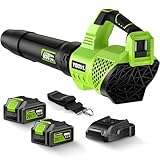
Tired of raking? We get it. Leaf blowing can be a game-changer for lawn maintenance, but with so many options out there, how do you choose the right one? It’s not as simple as grabbing the first one you see. The perfect leaf blower for your needs depends on a few key factors.
Whether you’re dealing with a small patio or a sprawling estate, understanding the different types, power sources, and features will save you time, effort, and a whole lot of frustration. Let’s dive into how to pick a leaf blower that will make yard work a breeze, not a chore.
Understanding Leaf Blower Types
The first step in picking the right leaf blower is understanding the different categories available. Each type has its own strengths and weaknesses, making them suitable for different tasks and user preferences.
1. Handheld Leaf Blowers
These are the most common and generally the most affordable leaf blowers. They are compact, lightweight, and easy to maneuver, making them ideal for smaller yards, quick cleanups, and reaching tight spots.
- Pros: Highly portable, easy to store, good for small to medium areas, generally less expensive.
- Cons: Can be less powerful than other types, may cause fatigue during extended use, battery-powered models have limited runtimes.
2. Backpack Leaf Blowers
Designed for larger properties and tougher jobs, backpack leaf blowers distribute weight across your shoulders and back. This makes them significantly more comfortable for prolonged use and allows for more powerful engines.
- Pros: Excellent power and airflow, comfortable for extended use, ideal for large yards and heavy debris.
- Cons: Bulkier and heavier than handheld models, can be more expensive, may be overkill for small jobs.
3. Wheeled/walk-Behind Leaf Blowers
These are the heavy-duty workhorses. Wheeled leaf blowers are essentially large, wheeled machines with powerful engines that propel air through a nozzle. They are best for very large properties, commercial use, or clearing vast amounts of wet leaves and debris.
- Pros: Maximum power and airflow, designed for large-scale cleanups, less physical strain on the user.
- Cons: Least portable, most expensive, require significant storage space, not suitable for intricate areas.
Powering Your Leaf Blower: Gas vs. Electric
Once you’ve decided on the type of leaf blower, the next crucial decision is its power source. This choice significantly impacts performance, portability, and maintenance.
Gas-Powered Leaf Blowers
Gas blowers are known for their raw power and unlimited runtime, making them a favorite for professionals and homeowners with large properties. They run on a mixture of gasoline and oil. (See Also: How Much To Replace A Blower Motor In A Car )
- Pros: Highest power and airflow, no cords or batteries to limit runtime, suitable for heavy-duty tasks and large areas.
- Cons: Noisier, heavier, require fuel mixing and maintenance (spark plugs, filters), produce emissions, can be harder to start.
Types of Gas Engines:
- 2-Stroke Engines: Lighter and simpler, but require a specific gas-oil mixture and tend to be louder and less fuel-efficient.
- 4-Stroke Engines: Heavier and more complex, but run on straight gasoline, are quieter, more fuel-efficient, and produce fewer emissions.
Electric Leaf Blowers
Electric leaf blowers offer a quieter, lighter, and more environmentally friendly alternative. They come in two main varieties: corded and cordless (battery-powered).
Corded Electric Leaf Blowers:
These require a continuous connection to a power outlet via an extension cord. They are generally the most affordable and offer consistent power without the need for recharging.
- Pros: Lightweight, quiet, no emissions, no need to recharge or refuel, consistent power supply, generally the most budget-friendly.
- Cons: Limited by cord length and the availability of outdoor outlets, can be cumbersome to manage the cord, not suitable for large areas.
Cordless (battery-Powered) Leaf Blowers:
These are powered by rechargeable lithium-ion batteries, offering the freedom of gas blowers without the fumes or noise. Battery technology has advanced significantly, offering impressive power and runtime.
- Pros: Portable and convenient, quiet operation, no emissions, minimal maintenance, good for small to medium yards, battery compatibility with other tools in the same brand.
- Cons: Limited by battery runtime, recharging takes time, battery replacement can be costly, power may not match high-end gas models.
Key Performance Metrics to Consider
When comparing leaf blowers, two primary metrics will tell you how well they perform their job: Air Volume (CFM) and Air Speed (MPH).
Air Volume (cfm – Cubic Feet Per Minute)
This measures the amount of air the blower can move. A higher CFM means the blower can move more leaves and debris at once, making it more efficient for larger areas and heavier piles.
- For light debris (grass clippings, small leaves) on small yards: 200-300 CFM
- For moderate debris (wet leaves, pine needles) on medium yards: 300-400 CFM
- For heavy debris (large piles, wet or matted leaves) on large yards: 400+ CFM
Air Speed (mph – Miles Per Hour)
This indicates how fast the air is expelled from the nozzle. Higher MPH is crucial for dislodging stubborn, wet leaves or debris that are stuck to the ground.
- For general cleanup: 150-180 MPH is often sufficient.
- For tough jobs and wet leaves: Look for 180 MPH and above.
Important Note: Don’t get fixated on just one metric. A blower with high CFM but low MPH might move a lot of air slowly, while one with high MPH but low CFM might blast a small area very intensely. The ideal combination depends on your specific needs. For most homeowners, a balance is key. (See Also: How To Replace Blower Motor Resistor Connector )
Additional Features to Enhance Your Experience
Beyond the core performance metrics, several features can make your leaf-blowing experience more comfortable and efficient.
Variable Speed Control
This allows you to adjust the blower’s power. Lower settings are great for delicate areas or guiding leaves without scattering them too far, while higher settings tackle tougher jobs. It also helps conserve battery life on electric models.
Cruise Control (for Backpack Blowers)
This feature, often found on higher-end backpack models, allows you to lock the throttle at a desired speed, freeing up your hand and reducing fatigue during long sessions.
Ergonomics and Weight Distribution
For handheld and backpack models, comfort is paramount. Look for padded shoulder straps, comfortable grips, and well-balanced designs to minimize strain. Lighter models are generally better for less strenuous tasks.
Noise Levels
Gas blowers are inherently louder than electric ones. If noise is a concern, especially in a residential area, an electric model is a much better choice. Check decibel (dB) ratings if available.
Vibration Reduction
Some models incorporate anti-vibration technology, which can significantly reduce the strain on your hands and arms during use, especially with gas-powered blowers.
Nozzle Types
While most blowers come with a standard round nozzle, some offer flat or concentrator nozzles. Flat nozzles can be more effective at directing a powerful stream of air for stubborn debris, while round nozzles offer broader coverage. (See Also: How To Start A John Deere Snow Blower )
Mulching/vacuum Functionality
Some leaf blowers can also function as vacuums and mulchers. They suck up leaves, shred them into fine pieces, and collect them in a bag. This is a great feature for reducing yard waste volume and preparing it for composting.
Choosing the Right Leaf Blower for Your Yard Size and Needs
Let’s break down recommendations based on common scenarios:
Small Yards (patios, Small Lawns, Driveways)
- Type: Handheld
- Power: Corded Electric or Battery-Powered Electric. A gas model might be overkill and too noisy.
- Key Specs: 150-200 MPH, 200-300 CFM.
- Features: Lightweight, easy to maneuver, variable speed.
Medium Yards (average Suburban Lawns, Gardens)
- Type: Handheld or lightweight Backpack
- Power: Battery-Powered Electric (consider a second battery) or a smaller Gas-Powered model (2-stroke or efficient 4-stroke).
- Key Specs: 170-200 MPH, 300-400 CFM.
- Features: Variable speed, good ergonomics, possibly mulching/vacuum function.
Large Yards (acreage, Lots of Trees, Hills)
- Type: Backpack or Wheeled
- Power: Gas-Powered (4-stroke recommended for comfort and efficiency). High-voltage battery systems are also becoming viable.
- Key Specs: 180+ MPH, 400+ CFM.
- Features: Cruise control, comfortable harness system, vibration dampening, high power output.
Commercial Use or Heavy Debris (wet Leaves, Pine Needles, Large Piles)
- Type: High-performance Backpack or Wheeled
- Power: Powerful Gas-Powered engines.
- Key Specs: 200+ MPH, 500+ CFM.
- Features: Durability, professional-grade construction, maximum power and airflow.
Maintenance and Safety Tips
Proper maintenance ensures your leaf blower lasts longer and operates safely. Always consult your owner’s manual for specific instructions.
General Maintenance for All Types:
- Cleaning: Keep the air intake and blower housing clean of debris.
- Storage: Store in a dry, protected area.
Gas Leaf Blower Specifics:
- Fuel: Use fresh, correct fuel mixture. Store fuel properly.
- Spark Plug: Check and replace as needed.
- Air Filter: Clean or replace regularly.
- Carburetor: May require occasional adjustment or cleaning.
Electric Leaf Blower Specifics:
- Batteries: Store batteries properly, avoid extreme temperatures, and follow charging guidelines.
- Cords: Inspect for damage before each use.
Safety First!
- Eye Protection: Always wear safety glasses or goggles.
- Hearing Protection: Especially crucial with gas blowers.
- Gloves: Protect your hands.
- Footwear: Wear sturdy, closed-toe shoes.
- Awareness: Be mindful of your surroundings, children, pets, and potential hazards like rocks or glass.
- Operation: Never point the blower at people or animals. Read the manual before operating.
Making Your Final Choice
By now, you should have a much clearer picture of how to pick a leaf blower that fits your specific needs. Consider your yard size, the type of debris you typically deal with, your budget, and your comfort level with maintenance. Don’t be afraid to look at reviews and compare models within your chosen category.
Remember, the best leaf blower isn’t necessarily the most powerful or the cheapest, but the one that makes your yard work easier and more efficient. Happy blowing!
Verdict
Choosing the right leaf blower boils down to matching its capabilities with your yard’s demands. For smaller spaces, electric handheld models offer convenience, while larger properties benefit from the power of gas-powered backpack units. Always prioritize CFM and MPH for effective clearing, and don’t overlook comfort features for extended use. Making an informed decision ensures your leaf blower becomes a valuable, time-saving tool for years to come.