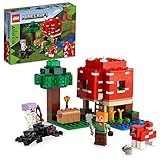
Ever stumbled upon a colossal mushroom in Minecraft and wondered how it got there? Or perhaps you’ve seen players with their own giant fungal forests and thought, “How do I do that?” Well, wonder no more! Growing your own mushroom trees in Minecraft is a fascinating and surprisingly straightforward process, adding a unique aesthetic to your world and providing a handy source of food.
Whether you’re aiming for a whimsical, fairy-tale landscape or a more functional, mushroom-farming operation, this guide will walk you through every step. We’ll cover the essential items you’ll need, the different types of mushrooms you can cultivate, and the precise conditions required for these giants to sprout. Get ready to transform your familiar Minecraft terrain into something truly extraordinary!
Unlocking the Secrets of Giant Mushrooms in Minecraft
The world of Minecraft is brimming with secrets, and the colossal mushrooms are certainly among its most striking natural wonders. These aren’t just decorative; they’re a source of valuable resources and can dramatically alter the landscape. Understanding how to cultivate them is a key skill for any aspiring builder or survivalist looking to add a unique touch to their gameplay experience.
The Basics of Mushroom Cultivation
At its core, growing a giant mushroom in Minecraft is about providing the right conditions for a small mushroom to grow into its massive form. This process is surprisingly simple and relies on a few key elements:
- Mushroom Type: You can grow either a giant red mushroom or a giant brown mushroom.
- Bonemeal: This is the magic ingredient that triggers the growth.
- Sufficient Space: Giant mushrooms need a considerable amount of vertical and horizontal space to form.
- Light Level: While not as critical as in some other farming methods, adequate light can be beneficial.
Gathering Your Essential Resources
Before you can embark on your mushroom-growing adventure, you’ll need to gather a few crucial items. The most important of these are the mushrooms themselves and the bonemeal that will fuel their growth.
Obtaining Mushrooms
Mushrooms are readily available in various biomes, often found in dark or damp areas. You’ll encounter both red and brown varieties. To collect them, simply break the mushroom block. Each broken mushroom will drop a mushroom item that you can then use for cultivation.
- Red Mushrooms: Commonly found in dark forests, swamps, and caves.
- Brown Mushrooms: Also found in similar dark and damp environments, often alongside red mushrooms.
It’s a good idea to collect a few of each type, as you’ll need one to initiate the growth process and potentially more if your first attempt doesn’t succeed or if you want to create multiple giant mushrooms.
Crafting or Acquiring Bonemeal
Bonemeal is the catalyst for turning a small mushroom into a towering giant. You can obtain bonemeal in a couple of ways:
- Farming Skeletons: Skeletons drop bones when killed. Three bones can be crafted into nine bonemeal. This is a reliable, albeit sometimes grindy, method.
- Composter: A composter can be crafted using eight building blocks (like cobblestone or planks) and a trapdoor in the center. You can then feed various organic items (like seeds, crops, saplings, rotten flesh) into the composter. Over time, it will produce bonemeal. This is an excellent sustainable method once you have a reliable source of organic materials.
The more bonemeal you have, the more attempts you can make and the quicker you can grow your mushrooms. Aim to have at least a stack or two to ensure you can grow several giant mushrooms without interruption.
The Process of Growing a Giant Mushroom
Now that you have your mushrooms and bonemeal, it’s time to put them to use! The process is remarkably simple, but requires attention to detail regarding placement and space.
Step 1: Find a Suitable Location
The most crucial factor for growing a giant mushroom is having enough space. Giant mushrooms require a 3×3 area at their base, and they grow upwards, often reaching significant heights. Ensure the area is:
- Clear: Remove any obstructions like trees, rocks, or other structures within a 3×3 radius around where you plan to plant the mushroom.
- Open Above: There should be at least 6-7 blocks of empty space directly above the mushroom’s base. The taller the mushroom, the more vertical clearance it needs.
- On Solid Ground: The mushroom needs to be planted on a solid block. This can be dirt, grass, stone, or any other non-transparent block.
Consider the aesthetic of your base. Do you want your giant mushroom to loom over your house, or be part of a secluded grove? Plan accordingly. (See Also: How Old Is the Hyperion Tree? Unveiling Its Age)
Step 2: Plant the Small Mushroom
Place your chosen mushroom (red or brown) on the ground in the center of your prepared 3×3 area. This small mushroom will serve as the seed for your colossal creation.
Step 3: Apply Bonemeal
Select your bonemeal in your hotbar and right-click on the small mushroom you just placed. You’ll see a brief animation, and if the conditions are right, the mushroom will instantly grow into its giant form!
If the mushroom doesn’t grow, it’s usually due to one of two reasons:
- Insufficient Space: Check again for any hidden obstructions above or around the mushroom. Even a single block can prevent growth.
- Incorrect Placement: Ensure the mushroom is planted on a solid block and not on a half-slab or other non-full block.
Simply try applying bonemeal again after verifying the space. You might need to use multiple bonemeal items for a single growth attempt, though usually one is sufficient if all conditions are met.
Understanding the Two Types of Giant Mushrooms
Minecraft features two distinct types of giant mushrooms, each with its own visual appeal and slight variations in their structure.
Giant Red Mushrooms
These mushrooms are characterized by their vibrant red caps and white stalks. They are often depicted as more whimsical and magical. When they grow, they form a large, bulbous red cap supported by a thick, white stem. The cap is typically wider than it is tall, creating a distinctive silhouette.
Appearance: Bright red cap with white spots, thick white stalk.
Habitat: Can be grown in any biome, but often look most striking in darker areas or alongside other red-themed builds.
Giant Brown Mushrooms
The giant brown mushrooms have a more earthy and perhaps slightly more imposing presence. Their caps are a deep brown, often with a more textured, layered appearance, and their stalks are also brown. They tend to grow slightly taller and more slender than their red counterparts, though this can vary.
Appearance: Dark brown cap, brown stalk.
Habitat: Like red mushrooms, they can be grown anywhere, but their darker colors might blend better into cave systems or dense forests. (See Also: How Often Does It Snow in Joshua Tree? Unpacking the)
Harvesting Your Giant Mushroom
Once your giant mushroom has sprouted, it becomes a renewable resource. Harvesting it is simple but requires a careful approach to ensure you get the most out of it.
The Simple Harvest Method
To harvest a giant mushroom, you simply need to break the blocks that make it up. The cap blocks and stalk blocks will drop as items. A giant mushroom can yield a significant number of mushroom blocks.
- Red Mushroom Harvest: Drops red mushroom blocks and red mushrooms.
- Brown Mushroom Harvest: Drops brown mushroom blocks and brown mushrooms.
These dropped blocks can then be used to craft more mushrooms, or simply as decorative building materials. The red and brown mushroom items themselves can be used to craft mushroom stew, which is a decent early-game food source.
Strategic Harvesting for Resources
For those looking to maximize their mushroom yield, consider this:
- Break from the Top: Start breaking the mushroom blocks from the highest point downwards. This ensures that the lower blocks are not obstructed when they drop.
- Use an Axe: While any tool can break mushroom blocks, an axe will be slightly faster. Enchantments like Efficiency can further speed up the process.
- Collect Carefully: Make sure to collect all the dropped items. They can despawn after a short period.
Advanced Mushroom Cultivation Techniques
Once you’ve mastered the basic growth, you might want to explore more advanced ways to incorporate giant mushrooms into your Minecraft world.
Creating Mushroom Forests
To create a dense mushroom forest, you’ll need to plant multiple giant mushrooms in close proximity. Remember the 3×3 base requirement for each mushroom. If you want them to grow close together, you’ll need to ensure that the 3×3 area for one mushroom doesn’t overlap with the 3×3 area of another, allowing for their caps to potentially touch or interlock without preventing growth.
A good spacing strategy is to leave at least one block of empty space between the outer edges of the 3×3 base areas. This often results in a visually appealing, dense forest where the caps of adjacent mushrooms might touch, creating a natural canopy.
Mushroom Houses and Structures
The large, unique shapes of giant mushrooms make them excellent candidates for building structures. You can:
- Build Inside: Hollow out the stalk and cap of a giant mushroom to create a unique dwelling or storage area. The mushroom blocks themselves can serve as walls and ceilings.
- Incorporate into Builds: Use the mushroom blocks as decorative elements in larger structures. Their distinct colors and textures can add a lot of character.
- Grow Them Strategically: Plant giant mushrooms around your base to create natural fortifications or aesthetic borders.
Experiment with combining red and brown mushroom blocks, or integrating them with other natural blocks like wood and stone, to create truly unique architectural designs.
Farming for Mushroom Stew
While giant mushrooms themselves don’t directly produce mushroom stew, the red and brown mushroom items you collect from them are essential ingredients. Crafting mushroom stew is done in a crafting table:
| Bowl | Bowl | Empty |
| Red Mushroom | Brown Mushroom | Empty |
| Empty | Empty | Empty |
Place one red mushroom and one brown mushroom in the crafting grid, along with a bowl. This will yield one bowl of mushroom stew. Mushroom stew provides a decent amount of saturation, making it a valuable food source, especially in the early to mid-game. (See Also: How Many Lights for 8ft Tree: Your Ultimate Guide)
Environmental Considerations
While giant mushrooms can grow almost anywhere, their appearance can be enhanced by their surroundings. Consider planting them:
- In Dark Caves: Giant brown mushrooms can look particularly atmospheric in dimly lit caverns.
- On Plains: A lone giant red mushroom can be a striking focal point on an open plain.
- Near Water: Swamps and areas with rivers can provide a natural, mystical setting for mushroom groves.
Troubleshooting Common Mushroom Growth Issues
Even with the best intentions, sometimes your giant mushroom might refuse to grow. Here are the most common culprits and how to fix them:
Issue: Mushroom Fails to Grow After Applying Bonemeal
Cause: Insufficient space is the most frequent reason. Even a single block above or around the mushroom can prevent it from growing. This includes things like:
- Leaves from a nearby tree.
- Overhanging blocks from a cliff face.
- Other structures you might have built.
- The mushroom is planted on a non-full block (like a slab or stair).
Solution: Carefully inspect the area around and above the mushroom. Clear any obstructions. Ensure the mushroom is planted on a full, solid block. Try applying bonemeal again.
Issue: Mushroom Grows, but Not to Full Giant Size
Cause: This is less common but can happen if the game world is experiencing lag or if there’s a very specific, rare block interaction. It’s more likely that the initial assumption of space was incorrect, and a small obstruction was missed.
Solution: Break the partially grown mushroom and try again in a more thoroughly cleared area. Double-check all clearances.
Issue: Only Small Mushrooms Appear
Cause: You’re likely trying to grow mushrooms in an area with insufficient light levels. While giant mushrooms can grow in darkness, their initial small form requires a certain light level to appear before they can be encouraged to grow larger. Also, ensure you are using bonemeal on the small mushroom.
Solution: Ensure the area has adequate light (e.g., place a torch nearby) when you first place the small mushroom. Then, apply bonemeal. If you are trying to grow them in a completely dark cave, try lighting it up temporarily.
The Benefits of Having Giant Mushrooms
Beyond their striking visual appeal, giant mushrooms offer several practical benefits to players:
- Renewable Food Source: The mushroom items harvested can be used to craft mushroom stew, a reliable source of sustenance.
- Decorative Building Blocks: The mushroom blocks themselves are unique and can be used to create distinctive structures, adding a fantasy element to your builds.
- Natural Ambiance: A well-placed giant mushroom or a small forest can dramatically enhance the atmosphere of your Minecraft world, making it feel more magical or mysterious.
- Landmark Creation: Giant mushrooms are large and distinctive, making them excellent natural landmarks that can help you navigate your world or mark important locations.
The ability to grow these colossal fungi is a testament to the diverse and creative possibilities within Minecraft. So, gather your resources, find your perfect spot, and start cultivating your very own fungal giants!
Conclusion
Growing mushroom trees in Minecraft is a rewarding endeavor that adds both visual flair and practical benefits to your game. By understanding the simple requirements of space, the right mushroom type, and the crucial role of bonemeal, you can transform ordinary terrain into a fantastical landscape. Whether you’re aiming for a cozy mushroom house or a sprawling fungal forest, the process is straightforward and accessible to all players. Enjoy the unique aesthetic and renewable resources these colossal fungi bring to your Minecraft adventures!
Recommended Products