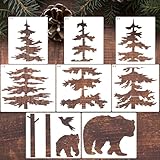
Ever looked at a majestic pine tree and wished you could capture its essence on paper? Drawing realistic trees can seem daunting, especially if you’re just starting out. But what if I told you that learning how to draw a pine tree easy is completely achievable, even with basic art supplies?
You don’t need to be a seasoned artist to create a beautiful pine tree. In fact, with a few simple techniques and a bit of practice, you’ll be sketching these iconic evergreens in no time. We’ll break down the process into manageable steps, focusing on the distinctive shapes and textures that make a pine tree instantly recognizable.
Get ready to transform a blank page into a miniature forest. Let’s embark on this artistic journey together and discover just how easy drawing a pine tree can be!
Mastering the Art of Drawing a Pine Tree: A Beginner’s Guide
Pine trees are a staple in many landscapes, from serene winter scenes to lush summer forests. Their distinctive conical shape and textured foliage make them instantly recognizable. But how do you translate that visual into a drawing that feels alive and natural? Don’t worry, we’re going to make learning how to draw a pine tree easy.
We’ll cover everything from the basic structure to adding those crucial details that bring your pine tree to life. Whether you’re sketching for a school project, a personal art piece, or just for fun, this guide will equip you with the skills you need.
Understanding the Basic Shape of a Pine Tree
Before we grab our pencils, let’s take a moment to observe a pine tree. What’s the first thing that comes to mind? For most of us, it’s that classic triangular or conical shape. This is the foundation of our drawing. Think of it as a rough outline, not a perfectly straight-edged triangle, but one that’s slightly irregular and wider at the base, tapering towards the top.
Key Characteristics to Note:
- Conical Silhouette: The overall shape is a cone.
- Layered Branches: Branches often appear in layers or tiers, with shorter branches at the top and longer ones towards the bottom.
- Needle-like Foliage: The ‘leaves’ are needles, which create a textured, somewhat ‘fluffy’ or ‘spiky’ appearance.
- Trunk: A visible trunk at the base, often textured with bark.
Materials You’ll Need
The beauty of learning how to draw a pine tree easy is that you don’t need a lot of fancy equipment. Here’s what we recommend:
- Pencils: A few graphite pencils of varying hardness (e.g., HB for sketching, 2B or 4B for shading).
- Paper: Standard drawing paper or sketchpad.
- Eraser: A good quality kneaded eraser is excellent for lifting graphite without damaging the paper.
- Sharpener: To keep your pencils in good condition.
Step-by-Step Guide: How to Draw a Pine Tree Easy
Let’s get started! We’ll break this down into simple, actionable steps. Grab your pencil and paper, and let’s begin.
Step 1: Sketching the Basic Cone Shape
Start by lightly sketching a large, slightly irregular triangle or cone shape on your paper. Don’t worry about making it perfect. Think of it as a guide for the overall form of your pine tree. It should be wider at the bottom and narrow towards the top. You can even make the sides a bit wobbly to suggest the natural, uneven growth of a tree.
Tip: Use a light touch with your pencil. These initial lines are just guides and will be erased or incorporated later.
Step 2: Defining the Branch Layers
Now, we need to give our cone some structure. Pine trees often have distinct layers of branches. Imagine horizontal lines or slightly curved ‘shelf’ shapes protruding from the central trunk line. These lines represent the general areas where branches will emerge. Start from the top and work your way down, making the ‘shelves’ progressively wider as you go lower. (See Also: How to Graft a Pear Tree: A Step-by-Step Guide)
At the very top, the branches are short and tucked in. As you move down, they become longer and more pronounced. Don’t draw solid lines for these; just light indications of where the branches will extend outwards.
Step 3: Adding the Trunk
At the base of your cone, sketch a simple trunk. It doesn’t need to be a perfect cylinder. Make it slightly wider at the bottom where it meets the ground and taper it upwards. You can also add a bit of texture to the trunk by drawing a few vertical, slightly wavy lines to suggest bark.
Step 4: Drawing the Foliage (the Fun Part!)
This is where your pine tree starts to look like a pine tree! Instead of drawing individual needles (which is very difficult and time-consuming), we’ll use a technique that suggests them. Take your pencil and start drawing short, jagged, V-shaped or U-shaped strokes extending outwards from the branch layers you sketched. Think of them as little tufts of needles.
Technique for Foliage:
- Start with short, quick strokes.
- Vary the length and direction of your strokes slightly to create a more natural look.
- Overlap these strokes to build up the density of the foliage.
- Don’t fill in every single gap; leave some areas lighter to suggest light filtering through the branches.
- Work from the top down, or from the outside edges inwards.
Focus on creating a textured, feathery appearance rather than trying to draw individual needles. Imagine you’re drawing little clusters of green. The key is to keep your strokes somewhat random and organic.
Step 5: Refining the Shape and Adding Depth
Look at your drawing. Does it feel a bit too uniform? Now is the time to add variation. Some branches might be slightly thicker than others. Some tufts of needles might be denser. You can use your eraser to lift some graphite in certain areas, creating highlights and making the foliage appear more three-dimensional. Conversely, you can add more dense strokes in other areas to create shadows.
Tip for Depth: Think about where the light source is coming from. Areas facing the light will be lighter, while areas in shadow will be darker.
Step 6: Shading and Texturing
Shading is what brings your pine tree to life. Use a softer pencil (like a 2B or 4B) to add darker tones. Concentrate your shading in the areas where branches overlap, under the thicker clumps of needles, and along the trunk. This will create a sense of volume and realism.
Shading Techniques:
- Hatching and Cross-hatching: Use parallel lines (hatching) and overlapping lines at different angles (cross-hatching) to build up tone.
- Smudging: You can gently smudge the graphite with your finger or a blending tool to create smooth, soft shadows. Be careful not to over-smudge, as it can make the drawing look muddy.
- Texturing the Trunk: Use short, varied strokes to mimic the rough texture of bark. Add some darker lines and smudges to suggest cracks and crevices.
Don’t be afraid to experiment with different shading intensities. Lighter shading will represent areas in more light, while darker shading will represent areas in shadow.
Step 7: Adding Ground and Context (optional)
To make your pine tree feel more grounded, you can add a few simple details around its base. This could be a patch of grass, a few scattered pine needles, or even a shadow cast by the tree itself. These small additions can significantly enhance the overall composition. (See Also: Christmas Tree Decorating How to: A Festive Guide)
Grounding Elements:
- Shadow: Draw a shadow extending from the base of the trunk, following the direction of your imagined light source.
- Pine Needles: Scatter a few short, spiky lines on the ground around the base.
- Snow or Ground Cover: Depending on the season, you can add a dusting of snow or a patch of earth.
Variations and Advanced Tips
Once you’ve mastered the basic technique, you can start experimenting with different types of pine trees and adding more detail.
Different Pine Tree Types
While the basic conical shape is common, pine trees come in various forms. Some are tall and slender, while others are more rounded or sprawling. Observe real pine trees or reference photos to capture these nuances.
- Dwarf Pines: Shorter, bushier, with a more rounded appearance.
- Ponderosa Pines: Often have a more open, irregular crown.
- Bristlecone Pines: Known for their gnarled, ancient appearance.
Adding More Realistic Foliage
For a more advanced look, you can try to suggest the ‘fluffiness’ of pine needles more explicitly. Instead of just V-shapes, try drawing slightly curved lines that emanate from the branches, creating a more wispy effect. You can also layer these strokes more densely. Imagine individual clusters of needles rather than just a general texture.
Drawing Multiple Pine Trees
When drawing a forest scene, remember that trees behind other trees will be partially obscured. Use overlapping shapes and varying sizes to create a sense of depth. The trees in the foreground will be more detailed and darker, while those in the background will be lighter and less defined.
Using Color
If you’re working with colored pencils, watercolors, or pastels, think about the different shades of green. Pine needles aren’t just one flat color. They can have variations of dark green, yellow-green, and even hints of blue or brown, especially in shadows or drier areas. Adding a touch of brown to the trunk will also enhance its realism.
Common Mistakes and How to Avoid Them
Even with an easy method, beginners can run into a few common pitfalls. Being aware of them can help you improve faster.
Mistake 1: Drawing a Perfect Triangle
Problem: Making the cone shape too geometric and straight. This makes the tree look unnatural and stiff.
Solution: Embrace imperfection! Make the sides of your cone slightly wavy or irregular. Think about how branches grow in nature – they aren’t perfectly symmetrical. Lightly sketch and then refine.
Mistake 2: Overly Dense or Flat Foliage
Problem: Filling in the entire tree with solid color or uniform strokes, making it look like a green blob. Or, drawing every single needle, which is impossible and looks unnatural.
Solution: Use varied, quick strokes to suggest needles. Leave some areas lighter to show light and shadow. Overlap strokes to create texture and depth, but don’t fill every gap. Think in terms of clusters and tufts. (See Also: How to Draw a Detailed Christmas Tree: A Step-by-Step…)
Mistake 3: Lack of Shading
Problem: A flat, two-dimensional drawing with no sense of volume or form.
Solution: Actively think about light and shadow. Use darker pencils to add shading under branches, in dense foliage areas, and on the trunk. This is crucial for making your tree look three-dimensional.
Mistake 4: Ignoring the Trunk Texture
Problem: A smooth, uninteresting trunk that doesn’t match the textured foliage.
Solution: Add some vertical, slightly wavy lines to suggest bark. Use your shading techniques to create highlights and shadows on the trunk, mimicking its rough surface.
Practice Makes Perfect!
The most important tip for learning how to draw a pine tree easy is to practice. The more you draw, the more comfortable you’ll become with the techniques. Try drawing different sizes and shapes of pine trees. Sketch them from different angles. Observe real pine trees in your neighborhood or look at photographs for inspiration.
Consider creating a small sketchbook dedicated to trees. You can fill it with quick studies of different pine trees, experimenting with various shading and foliage techniques. This will not only improve your drawing skills but also build your confidence as an artist. Remember, every artist started somewhere, and consistent practice is the key to improvement.
Conclusion
You’ve now learned how to draw a pine tree easy, transforming a seemingly complex subject into a series of simple, manageable steps. By focusing on the basic cone shape, layering branches, and using suggestive strokes for foliage, you can create a realistic-looking pine tree without needing advanced artistic skills.
Remember to embrace imperfection, experiment with shading, and practice consistently. With these techniques, you’re well on your way to sketching beautiful pine trees that add a touch of nature to your artwork.
Recommended Products