So, you’ve got a pine tree that needs to come down. Maybe it’s too close to your house, diseased, or simply in the way of your dream backyard project. Whatever the reason, taking down a tree, especially a pine, can seem like a daunting task. It’s a job that requires careful planning, the right equipment, and a solid understanding of safety protocols.
But don’t worry! We’re here to guide you through the entire process of how to cut down a pine tree, from assessing the situation to the final cleanup. This isn’t a task to be rushed or taken lightly. Safety is paramount, and understanding the mechanics of felling a tree will ensure you and your property remain unharmed. Let’s get started on making this tree a thing of the past, safely and efficiently.
Mastering the Art: How to Cut Down a Pine Tree
Taking down a pine tree is a significant undertaking that demands respect for the tree’s power and a commitment to safety. While it might seem straightforward, a misstep can lead to serious injury or costly damage. This guide will walk you through every critical step, ensuring you’re well-prepared for the job.
1. Assess the Situation: Is It a Diy Job?
Before you even think about picking up a chainsaw, you need to honestly assess if this is a job you can handle yourself. Several factors will dictate this:
- Tree Size and Health: Is the pine tree tall and thick? Is it leaning precariously? Are there signs of rot, disease, or significant damage? Larger, unhealthy, or leaning trees are significantly more dangerous and often best left to professionals.
- Surroundings: What’s around the tree? Are there buildings, fences, power lines, other trees, or valuable landscaping that could be damaged if the tree falls incorrectly? The more obstacles, the higher the risk.
- Your Experience and Comfort Level: Have you operated a chainsaw before? Are you comfortable with the physical demands and the inherent risks? If you have any doubts, it’s wiser to err on the side of caution.
- Local Regulations: Some areas have regulations regarding tree removal, especially for mature or significant trees. Always check with your local municipality or homeowner’s association before proceeding.
When to Call a Professional: If the tree is over 20-30 feet tall, is diseased or damaged, leans significantly, is close to power lines or structures, or if you have any doubts whatsoever, hire a certified arborist. Their expertise and insurance are invaluable for high-risk situations.
2. Gather Your Essential Gear
Safety is non-negotiable. Invest in or rent the proper personal protective equipment (PPE) and tools. Don’t skimp here!
Personal Protective Equipment (ppe):
- Chainsaw Safety Helmet: With integrated ear protection and a face shield or safety glasses. This protects your head, hearing, and eyes from falling debris and sawdust.
- Chainsaw Chaps or Pants: Made of ballistic nylon or Kevlar, these are designed to stop a moving chain instantly, preventing severe leg injuries.
- Heavy-Duty Work Gloves: For grip and protection against splinters and minor abrasions.
- Steel-Toed Boots: To protect your feet from falling objects and the chainsaw.
- High-Visibility Vest: Makes you more visible to others, especially in wooded areas or low light.
Essential Tools:
- Chainsaw: Choose one appropriate for the size of the tree. A powerful enough saw will make the job easier and safer. Ensure it’s well-maintained with a sharp chain.
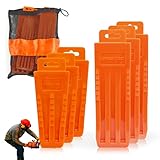
- Felling Wedge(s): Plastic or aluminum wedges are crucial for controlling the direction of the fall and preventing the chainsaw from getting pinched.
- Axe or Hatchet: For clearing small branches and shaping the notch.
- Sledgehammer or Maul: To drive the felling wedges.
- Rope and Pulley System (Optional but Recommended): For added control, especially in tricky situations or for guiding the fall.
- First-Aid Kit: Always have one readily accessible.
- Communication Device: A fully charged cell phone or a two-way radio.
- Shovel: For clearing the ground around the base of the tree.
3. Plan Your Escape Route
This is a critical step that many overlook. Before you make a single cut, you MUST plan your escape route. The tree will fall in the direction of least resistance, usually away from its lean, but not always predictably. Your escape route should be: (See Also: How to Prune a Plum Tree: Your Essential Guide for…)
- At a 45-degree angle away from the intended fall direction.
- Clear of obstacles like branches, roots, or equipment.
- Long enough to get you a safe distance away before the tree hits the ground.
Visualize this route and clear it if necessary. You’ll need to move quickly once the tree starts to go.
4. Determine the Fall Direction
Deciding where the tree will fall is paramount. Consider:
- Natural Lean: Most trees have a slight lean. This is usually the best indicator of the fall direction.
- Wind: Never cut a tree in high winds. Even a slight breeze can affect the fall. If there’s a gentle breeze, try to use it to your advantage, but be aware it can shift.
- Branch Distribution: Uneven branches can cause the tree to twist or fall unpredictably.
- Obstacles: As mentioned, ensure your chosen direction is clear.
If the tree leans heavily in one direction, that’s typically where it will fall. If it’s relatively straight, you might need to use wedges and your cuts to influence the direction. Sometimes, a rope and pulley system anchored to another sturdy tree can help guide the fall.
5. Prepare the Tree and Work Area
This stage involves making the area safe and accessible for the felling process.
Clear the Base:
Use your shovel and axe to clear away brush, low-hanging branches, and any debris from around the base of the tree. You need at least a 10-foot radius clear. This ensures you have good footing and an unobstructed escape path.
Remove Lower Branches:
Using a chainsaw or loppers, carefully remove any branches that might interfere with your cuts or your escape route. Be cautious when cutting branches above shoulder height, as they can fall unexpectedly. Always stand to the side of the branch being cut, not directly underneath. (See Also: How to Revive a Christmas Tree: Save Your Dying Fir!)
6. The Felling Cuts: Notch and Back Cut
This is where the magic (and danger) happens. The felling process involves two main types of cuts: the notch and the back cut.
The Undercut (notch):
The notch directs the fall. It should be made on the side of the tree facing the intended fall direction. There are two common types of notches:
- Open-Face Notch: This is generally preferred as it offers more control. It’s made with two cuts:
- Top Cut: An angled cut (about 45-60 degrees) going downwards into the tree, about one-quarter to one-third of the tree’s diameter.
- Bottom Cut: A horizontal cut that meets the end of the top cut, forming a “V” shape.
- Conventional Notch: This is a simpler notch, but can be less precise. It involves an angled top cut and a horizontal bottom cut that meet.
Key Points for the Notch:
- The notch should be deep enough to control the fall but not so deep that it goes past the center of the tree.
- The hinge wood (the uncut wood between the notch and the back cut) is crucial. It acts like a door hinge, guiding the tree’s fall.
The Back Cut (felling Cut):
This cut is made on the opposite side of the notch. Its purpose is to sever the remaining wood, allowing the tree to fall.
- Placement: The back cut should be slightly higher than the bottom of the notch (about 1-2 inches).
- Hinge Wood: The critical element here is leaving a hinge of uncut wood between the notch and the back cut. This hinge should be about one-tenth of the tree’s diameter in width. It’s what prevents the tree from kicking back or falling sideways unpredictably.
- Driving Wedges: As you make the back cut, you will insert felling wedges into the cut to prevent the chainsaw from getting pinched and to help push the tree over in the desired direction. Drive them in with your sledgehammer as the saw cuts deeper.
Step-by-Step Felling Cut Process:
- Make the top cut of the notch at the correct angle.
- Make the bottom cut of the notch to meet the top cut, removing the wedge of wood.
- Begin the back cut on the opposite side of the tree, about 1-2 inches higher than the bottom of the notch.
- As the saw cuts deeper, insert felling wedges into the back cut to keep it open and to begin influencing the fall direction.
- Continue the back cut, ensuring you maintain the hinge wood.
- Stop cutting when the tree begins to lean and move.
- Immediately withdraw the chainsaw and retreat along your planned escape route.
7. The Fall and Aftermath
Once the back cut is complete and the hinge wood is engaged, the tree will begin to fall. This is the moment to execute your escape plan.
- Retreat Quickly: Move swiftly and deliberately along your predetermined escape route.
- Watch the Tree: Keep an eye on the falling tree from a safe distance. Be aware of any breaking branches or unpredictable movements.
- Listen for Sounds: The sound of cracking wood can indicate further instability.
- Wait for it to Settle: Never approach the fallen tree immediately. Wait for it to come to a complete stop and for any residual movement to cease.
8. Clearing and Limbing
Once the tree has fallen and settled safely, the work isn’t over. You’ll need to clear the branches and cut the trunk into manageable sections. (See Also: How to Use Tea Tree Oil for Poison Ivy Relief)
Limbing:
This involves removing the branches from the trunk.
- Start from the base and work your way up.
- Stand on the uphill side of the trunk if the ground is sloped.
- Be aware of spring poles – branches under tension that can snap back violently when cut. Cut these carefully from the opposite side of the tension.
- Never stand directly behind the chainsaw when cutting a limb.
Bucking (cutting the Trunk):**
This is cutting the trunk into sections.
- Assess Tension: Look for areas where the trunk is supported by the ground or other debris, creating tension.
- If the trunk is supported on one side (compression), cut from the top down to about one-third of the way through. Then, make a second cut from the bottom up to meet the first cut, completing the section. This prevents the saw from pinching.
- If the trunk is supported on both sides (tension), cut from the top down to about one-third of the way through. Then, make a second cut from the bottom up to meet the first cut.
- If the trunk is supported on the ground, cut from the top down to about one-third of the way through. Then, make a second cut from the bottom up to meet the first cut.
- Always ensure the saw is not pinched. Use wedges if necessary.
9. Cleanup and Disposal
The final stage is to clean up the debris and dispose of the wood.
- Chop into Firewood: If you plan to use the wood for firewood, cut it into appropriate lengths.
- Haul Away: For larger sections or if you don’t need the wood, you’ll need to arrange for disposal. This might involve renting a chipper, hiring a hauling service, or taking it to a local disposal site.
- Clear the Area: Remove all sawdust, branches, and equipment.
Safety Recap: The Golden Rules
We can’t stress this enough: safety is paramount. Here’s a quick recap of the most critical safety points:
- Never work alone. Always have someone present who can assist in an emergency.
- Wear all your PPE at all times.
- Maintain your chainsaw. A sharp chain and properly functioning saw are safer.
- Plan your escape route and keep it clear.
- Understand the hinge wood and its importance.
- Never cut above shoulder height without proper support and technique.
- Be aware of spring poles and tension in branches and the trunk.
- If in doubt, stop and call a professional.
Common Mistakes to Avoid:
- Not wearing proper PPE.
- Working alone.
- Not planning an escape route.
- Cutting too deep and losing the hinge wood.
- Allowing the saw to get pinched.
- Ignoring the lean or wind.
- Approaching the tree too soon after the fall.
By following these steps and prioritizing safety, you can successfully tackle the task of how to cut down a pine tree. Remember, patience and careful execution are your best allies.
Conclusion
Cutting down a pine tree is a serious undertaking that requires meticulous planning, the right safety gear, and a thorough understanding of the felling process. By carefully assessing the tree and its surroundings, preparing your escape route, and executing the notch and back cuts precisely while respecting the hinge wood, you can significantly increase your chances of a safe and successful removal. Always remember that when in doubt, the safest option is to call in certified professionals.
Recommended Products