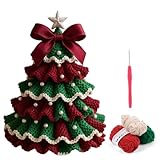
The twinkling lights, the festive carols, and the scent of gingerbread – the holiday season is a magical time! And what better way to add a touch of handmade charm to your decorations than with a crocheted Christmas tree?
If you’re new to the world of crochet, don’t worry! This guide is designed specifically for beginners. We’ll walk you through each step, from understanding your materials to creating your very own mini festive tree. Imagine adorning your mantelpiece or gifting these delightful creations to loved ones. It’s simpler than you might think, and incredibly rewarding!
Get ready to cozy up with your hook and yarn. We’re about to embark on a delightful crafting journey that will bring a unique sparkle to your Christmas.
Getting Started: Your Beginner’s Guide to Crocheting a Christmas Tree
Welcome, aspiring crafter! You’ve decided to crochet a Christmas tree, and that’s a fantastic choice for a beginner project. It’s a relatively small and repetitive pattern, making it perfect for practicing your stitches and building confidence. Before we dive into the actual crocheting, let’s make sure you have everything you need and understand the basics.
Essential Crochet Supplies for Your Festive Project
To create your charming crocheted Christmas tree, you’ll need a few key items. Don’t feel overwhelmed; most of these are standard crochet supplies you’ll use for many projects to come.
- Yarn: For a beginner-friendly tree, I recommend using a medium-weight yarn (also known as worsted weight or Aran weight). Green is the obvious choice for a Christmas tree, but feel free to experiment with other festive colors like red, white, or even sparkly metallic yarn! For a small tabletop tree, one skein should be plenty.
- Crochet Hook: The size of your crochet hook should correspond with your yarn. Most yarn labels will suggest a hook size. For a medium-weight yarn, a 5mm (H-8) or 5.5mm (I-9) hook is usually a good starting point. A slightly larger hook will create a looser fabric, which can be forgiving for beginners.
- Scissors: A sharp pair of scissors is essential for cutting yarn.
- Yarn Needle (Tapestry Needle): This needle has a blunt tip and a large eye, making it perfect for weaving in any loose yarn ends once your tree is complete.
- Stitch Marker: While not strictly essential for this simple pattern, a stitch marker can be very helpful, especially when you’re starting out, to mark the beginning or end of a round.
- Stuffing (Optional): If you want your tree to stand up firmly, you might want a small amount of polyester fiberfill stuffing.
Understanding Basic Crochet Stitches
This project primarily uses a few fundamental crochet stitches. If you’re completely new to crochet, I highly recommend practicing these stitches separately before starting your tree. There are tons of great video tutorials online that can show you how to create them.
- Chain Stitch (ch): This is the foundation of most crochet projects. It creates a series of loops that form a chain.
- Single Crochet (sc): This is the most basic stitch, creating a dense and firm fabric.
- Half Double Crochet (hdc): Slightly taller than a single crochet, it creates a fabric with a bit more drape.
- Double Crochet (dc): This stitch is taller than the hdc and creates a looser fabric.
- Slip Stitch (sl st): Used to join stitches or move around a project without adding height.
Reading Crochet Patterns: A Beginner’s Key
Crochet patterns use abbreviations to make them shorter. Here are the common ones you’ll encounter in this pattern:
- st(s) – stitch(es)
- ch – chain
- sc – single crochet
- hdc – half double crochet
- dc – double crochet
- sl st – slip stitch
- rnd(s) – round(s)
- \* \*\ – repeat the instructions between the asterisks
- ( ) – instructions within parentheses are worked into the same stitch
- [ ] – the number in brackets at the end of a row/round indicates the total number of stitches for that row/round.
Crocheting Your Christmas Tree: Step-by-Step
Let’s get down to business! We’ll be crocheting our tree in rounds, working from the top down. This method creates a nice, conical shape.
The Tree Top (round 1)
We start with a magic ring, which creates a tight, closed center. If magic rings are a bit tricky for you at first, you can also chain 2 and work your stitches into the second chain from the hook. (See Also: How to Grow a Cypress Tree From Seed: A Complete Guide)
- Make a magic ring.
- Chain 1 (does not count as a stitch).
- Work 6 single crochets (sc) into the magic ring.
- Pull the tail of the magic ring tightly to close the center.
- Join with a slip stitch (sl st) to the first sc.
- [6 sc]
Growing the Tree (round 2)
In this round, we’ll increase the number of stitches to start forming the width of our tree. We’ll be working two single crochets into each stitch from the previous round.
- Chain 1.
- Work 2 sc in each st around.
- Join with a sl st to the first sc.
- [12 sc]
Adding More Width (round 3)
We continue to increase, but this time, we’ll alternate between working a single crochet and then two single crochets in the next stitch.
- Chain 1.
- \*Work 1 sc in the next st, then work 2 sc in the next st.\* Repeat from \* to \* around.
- Join with a sl st to the first sc.
- [18 sc]
Establishing the Pattern (round 4)
For this round, we’ll introduce a slightly different stitch to create a bit of texture and visual interest. We’ll use half double crochets (hdc).
- Chain 2 (counts as your first hdc).
- Work 1 hdc in the next st.
- \*Work 2 hdc in the next st, work 1 hdc in the next 2 sts.\* Repeat from \* to \* around.
- Join with a sl st to the top of the beginning ch-2.
- [24 sts (hdc)]
Continuing the Shape (round 5)
We’re going to increase again, and we’ll continue using half double crochets.
- Chain 2 (counts as your first hdc).
- Work 1 hdc in the next st.
- \*Work 2 hdc in the next st, work 1 hdc in the next 3 sts.\* Repeat from \* to \* around.
- Join with a sl st to the top of the beginning ch-2.
- [30 sts (hdc)]
Introducing Double Crochets (round 6)
Now we’ll switch to double crochets (dc) to make the subsequent rounds taller and widen the base of the tree even more.
- Chain 3 (counts as your first dc).
- Work 1 dc in the next st.
- \*Work 2 dc in the next st, work 1 dc in the next 4 sts.\* Repeat from \* to \* around.
- Join with a sl st to the top of the beginning ch-3.
- [36 sts (dc)]
Widening the Base (round 7)
We’ll continue with double crochets and increase to create a nice, full base for our tree.
- Chain 3 (counts as your first dc).
- Work 1 dc in the next st.
- \*Work 2 dc in the next st, work 1 dc in the next 5 sts.\* Repeat from \* to \* around.
- Join with a sl st to the top of the beginning ch-3.
- [42 sts (dc)]
Final Rounds for Shape (round 8)
We’ll make one more round of increases using double crochets to give our tree a good foundation. You can add more rounds if you want a wider tree. Just remember to increase the number of single/half double/double crochets between the increases in each round accordingly.
- Chain 3 (counts as your first dc).
- Work 1 dc in the next st.
- \*Work 2 dc in the next st, work 1 dc in the next 6 sts.\* Repeat from \* to \* around.
- Join with a sl st to the top of the beginning ch-3.
- [48 sts (dc)]
Finishing Off Your Tree
Once you’ve completed your last round, it’s time to finish your tree. (See Also: Mastering Tree Felling: How to Cut a Tree to Fall a…)
- After joining the last round, cut your yarn, leaving a tail of about 6 inches.
- Pull the tail through the loop on your hook to secure the last stitch.
- Thread the yarn tail onto your yarn needle.
- Weave the yarn tail through the stitches on the wrong side of your work to hide it securely. Trim any excess yarn.
Adding a Trunk (optional)
Some people like to add a small trunk to their crocheted tree. Here’s a simple way to do it:
- Attach brown yarn to one of the stitches at the very bottom edge of your tree.
- Chain 3.
- Work 3 dc into the same stitch where you attached the yarn.
- Sl st into the next stitch to secure.
- Fasten off and weave in ends.
Stuffing Your Tree (optional)
If you want your tree to be more three-dimensional and stand up on its own, you can lightly stuff it before closing the top. You can either:
- Stuff as you go: If you’re working the rounds and want it to be firm, you can start adding small amounts of stuffing into the center as you work the earlier rounds.
- Stuff at the end: Once all rounds are complete, you can carefully insert stuffing through the opening at the bottom (if you didn’t add a trunk) or through any gaps in the stitches. Gently push the stuffing up towards the top until your tree has the desired fullness.
Decorating Your Crocheted Christmas Tree
This is where you can really let your creativity shine! Here are some ideas for decorating your beginner crocheted Christmas tree:
- Beads: Sew on small seed beads in red, gold, or silver to mimic ornaments.
- Sequins: Glue or sew on small sequins for a touch of sparkle.
- Embroidery Floss: Use embroidery floss to add tiny French knots or French knots for ornaments.
- Tiny Pom-poms: Make very small pom-poms from embroidery floss or yarn and attach them.
- A Star or Angel Topper: Crochet a small star or angel using a similar technique or a different simple pattern and attach it to the very top.
- Glitter Glue: For a subtle shimmer, add a touch of glitter glue to the edges of some stitches.
Tips for Crocheting Christmas Trees for Beginners
As you work on your tree, keep these tips in mind to ensure a smooth and enjoyable experience:
- Consistent Tension: Try to maintain an even tension throughout your work. This means not pulling your yarn too tight or leaving it too loose. Practice makes perfect!
- Count Your Stitches: It’s easy to miss a stitch or accidentally add an extra one, especially when you’re learning. Counting your stitches at the end of each round will help you catch mistakes early.
- Don’t Be Afraid to Frog: “Frogging” is crocheting slang for ripping out your work. If you notice a mistake a few rounds back, it’s often easier to undo those rounds and fix it than to leave a noticeable error.
- Use Different Colors: While green is traditional, try making trees in red, white, or even rainbow colors! They can be just as festive.
- Make Them Different Sizes: Once you’re comfortable with this pattern, you can easily adjust it to make larger or smaller trees by adding or removing rounds. Just remember to adjust the number of stitches between increases in each round.
- Practice the Foundation: If you’re struggling with the magic ring, practice it a few times on its own. There are many excellent video tutorials available that break down the steps clearly.
- Take Breaks: Crochet is a relaxing hobby, but it’s also important to take breaks to rest your hands and eyes.
- Enjoy the Process: The most important tip is to have fun! The holiday season is all about joy and creativity.
Variations for More Experienced Crocheters
Once you’ve mastered this basic tree, you might want to try some variations:
- Different Stitches: Experiment with other stitches like the treble crochet (tc) for a taller tree or the crocodile stitch for a textured effect.
- Color Changes: Introduce stripes by changing yarn colors every few rounds.
- Adding a Base: Instead of stuffing, crochet a flat, circular base to make your tree stand more stably.
- Embellishments: Use more intricate beadwork, embroidery, or even crochet small flowers or motifs to add to your tree.
- Layered Trees: Crochet multiple trees of slightly different sizes and stack them for a layered effect.
This beginner-friendly pattern is a wonderful starting point for anyone looking to add a handmade touch to their holiday decor. The repetitive nature of the increases and stitches allows you to get into a rhythm, and the satisfaction of seeing your little tree grow is immense. Whether you’re making a single tree for your desk or a whole forest for your mantelpiece, you’re creating something truly special.
Troubleshooting Common Beginner Issues
Even with the best intentions, beginners sometimes run into a few snags. Here’s how to navigate them:
My Stitches Look Uneven.
This is usually due to inconsistent tension. Try to relax your grip on the yarn and hook. Imagine you’re gently holding a bird – you want to be firm enough that it doesn’t fly away, but not so tight that you hurt it! Practicing individual stitches on a scrap piece of yarn can help you find a more consistent tension. (See Also: How Often Do I Water a Bonsai Tree? Your Essential Guide!)
I’m Losing Stitches.
This is a very common issue when starting out. Make sure you are inserting your hook into the correct stitch in each round. Using a stitch marker in the first stitch of each round can be a lifesaver. Also, be sure you’re counting correctly when you’re instructed to work into the next stitch.
My Tree Is Curling or Ruffling.
If your tree is curling inwards, you might be crocheting too tightly. If it’s ruffling outwards, you might be crocheting too loosely, or you might have too many stitches in a round. Re-count your stitches and compare them to the pattern’s stitch count for that round. If the counts are correct, adjust your tension.
The Hole in the Center Is Too Big.
If you used a magic ring, ensure you pulled the tail tightly to close it. If you chained 2 to start, you can sometimes use your yarn needle to stitch the opening closed after you’ve finished crocheting the tree. For future projects, practice the magic ring technique.
I Don’t Know Which Stitch to Join to.
When the pattern says to join with a slip stitch, you’ll typically join to the first actual stitch of the round, not the beginning chain (unless the pattern specifies otherwise, like in Round 4 and 5 where we join to the ch-2). Look for the first prominent stitch and insert your hook there.
Don’t get discouraged if your first attempt isn’t perfect. Every crocheter, no matter how experienced, has made mistakes. The key is to learn from them and keep practicing. Each tree you make will be better than the last!
Conclusion
You’ve successfully learned how to crochet a Christmas tree for beginners! This festive project is a wonderful introduction to working in the round and practicing basic stitches. With a little patience and practice, you’ll be creating a whole forest of charming trees to adorn your home or gift to friends and family. Remember, the joy of crafting is in the process and the unique touch you bring to each creation. Happy crocheting, and happy holidays!
Recommended Products