So, you’ve got a shiny new shed, or maybe you’re finally upgrading that old one. You’ve poured a beautiful concrete slab, ready for its new inhabitant. But wait! Before you start storing your lawnmower and garden tools, there’s a crucial step you can’t skip: anchoring your shed to the concrete slab.
Why is this so important? Well, a shed that isn’t properly anchored is vulnerable to wind, storms, and even simple shifting. Imagine the frustration (and cost!) of having your shed blow away or get damaged. This guide will walk you through the process, ensuring your shed stays put and your belongings stay safe. We’ll cover everything from choosing the right anchors to the step-by-step installation.
Let’s get started securing your investment!
Understanding Why Anchoring Is Essential
Before diving into the ‘how,’ let’s clarify the ‘why.’ Anchoring your shed isn’t just a good idea; it’s a necessity. Think of your shed as a large sail. Even a moderate breeze can exert significant force, especially on the roof and walls. Without proper anchoring, this force can easily lift or shift your shed, leading to damage or complete displacement.
The Risks of Not Anchoring
- Wind Damage: This is the most significant risk. High winds can rip a shed from its foundation, causing extensive damage to the shed itself and potentially to surrounding property.
- Shifting and Movement: Even without extreme weather, a shed can gradually shift over time due to ground movement or settling, leading to misaligned doors, windows, and structural issues.
- Vandalism and Theft: A shed that isn’t securely anchored is easier for vandals to access and for thieves to move or break into.
- Voided Warranties: Many shed manufacturers require proper anchoring for their warranties to be valid. Failing to anchor your shed could mean losing coverage if something goes wrong.
Common Shed Anchoring Methods
There are several methods for anchoring a shed to a concrete slab. The best choice depends on the type of shed, the local climate, and your personal preferences. We’ll explore the most common techniques in detail below.
Choosing the Right Anchoring Method
Selecting the appropriate anchoring method is crucial for the long-term stability and safety of your shed. Here’s a breakdown of the most popular options, along with their pros and cons:
1. Concrete Anchors (bolts and Screws)
Description: This is a very common and reliable method. Concrete anchors are specifically designed to be inserted into pre-drilled holes in the concrete slab. They expand within the hole, creating a secure hold. There are several types of concrete anchors, including:
- Wedge Anchors: These anchors have a wedge-shaped end that expands when tightened. They’re strong and suitable for heavier sheds.
- Sleeve Anchors: These anchors have a sleeve that expands against the concrete when tightened. They’re good for applications where the anchor needs to sit flush with the surface.
- Lag Shields and Lag Screws: Lag shields are inserted into the concrete, and lag screws are then screwed into the shield. This is a good option for wood-framed sheds.
Pros:
- Strong and reliable hold.
- Relatively easy to install.
- Suitable for a variety of shed sizes and materials.
- Permanent solution.
Cons:
- Requires drilling into the concrete slab.
- Can be difficult to remove if you need to relocate the shed.
2. Epoxy Anchors
Description: Epoxy anchors use a special epoxy adhesive to bond the anchor to the concrete. They are incredibly strong and are often used in high-stress applications.
Pros:
- Very strong and durable.
- Excellent for high-wind areas.
- Can be used in situations where concrete anchors might not be suitable (e.g., thin concrete slabs).
Cons:
- More complex installation process.
- Requires careful mixing of the epoxy.
- Can be more expensive than other methods.
- Permanent solution.
3. Angle Brackets and Fasteners
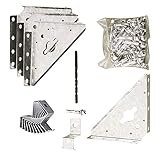
Description: Angle brackets are metal brackets that are attached to the shed’s framing and then bolted or screwed into the concrete slab. This method is often used for wood-framed sheds. (See Also: How to Install Shingles on a Shed Roof: A Step-by-Step Guide)
Pros:
- Relatively easy to install.
- Provides a secure connection.
- Cost-effective.
Cons:
- May require some carpentry skills.
- Less strong than concrete or epoxy anchors.
4. Ground Anchors (for Sheds Without a Slab – but Worth Mentioning)
Description: While this guide focuses on sheds on concrete slabs, it’s worth mentioning ground anchors. These are large, screw-in or stake-style anchors that are driven into the ground and connected to the shed’s frame. They are suitable for sheds without a concrete foundation.
Pros:
- Easy to install (for sheds without a slab).
- Relatively inexpensive.
Cons:
- Less secure than anchoring to a concrete slab.
- Not suitable for areas with rocky soil.
- Can be prone to movement over time.
Step-by-Step Guide: Anchoring Your Shed with Concrete Anchors
This section will provide a detailed, step-by-step guide on how to anchor your shed to a concrete slab using concrete anchors (wedge anchors, sleeve anchors, or lag shields and lag screws). This is a common and reliable method for most shed types.
1. Gather Your Materials and Tools
Before you start, make sure you have everything you need. This will save you time and prevent interruptions. You’ll need:
- Your Shed: Obviously! Make sure it’s assembled or at least partially assembled.
- Concrete Anchors: Choose the appropriate type and size for your shed and the thickness of your concrete slab. Consider the shed’s construction (wood, metal, etc.) and the anticipated wind loads in your area.
- Drill: A hammer drill is recommended for drilling into concrete.
- Drill Bits: You’ll need a concrete drill bit that matches the size of your concrete anchors.
- Hammer: For driving in wedge anchors or setting lag shields.
- Wrench or Socket Set: To tighten the anchors.
- Measuring Tape: For accurate measurements.
- Pencil or Marker: To mark the anchor locations.
- Level: To ensure the shed is level.
- Safety Glasses and Gloves: Always protect your eyes and hands.
- Optional: Shims (wood or plastic) to level the shed if the concrete slab is uneven.
2. Position and Level the Shed
Carefully position your shed on the concrete slab. Ensure it’s where you want it and that it’s aligned correctly. Use a level to check that the shed is level in all directions. If the concrete slab is uneven, use shims to level the shed before proceeding. This is crucial for proper anchoring and for the shed’s structural integrity.
3. Mark Anchor Locations
Determine where you want to place your concrete anchors. This typically involves marking the locations on the shed’s framing where it contacts the concrete slab. The spacing and number of anchors will depend on the shed’s size, design, and local building codes. A general rule of thumb is to place anchors at each corner and at regular intervals along the shed’s walls. Consult the shed’s instructions or local building codes for specific recommendations.
Tip: Consider the placement of doors and windows. You want to ensure that anchors don’t interfere with their operation.
Marking the Locations:
- Place the shed’s frame directly on the concrete slab.
- Use a pencil or marker to mark the locations for the anchors on the concrete slab, through the shed’s framing.
- If the shed has a bottom plate, you’ll likely be drilling through this.
4. Drill the Holes
Once you’ve marked the anchor locations, it’s time to drill the holes. This is where a hammer drill and concrete drill bit come in handy. (See Also: How to Install a Shed Window: A Step-by-Step Guide)
- Select the Correct Drill Bit: Choose a concrete drill bit that matches the diameter of your concrete anchors. The anchor packaging will specify the correct drill bit size.
- Put on Safety Glasses: Always wear safety glasses when drilling into concrete.
- Position the Drill: Place the drill bit on the marked location.
- Start Drilling: Start drilling slowly, applying steady pressure. Gradually increase the speed of the drill.
- Drill to the Correct Depth: Drill the hole to the depth specified by the anchor manufacturer. The anchor packaging will provide this information. Be precise, as the anchor needs sufficient depth to grip properly.
- Clear the Holes: After drilling each hole, use a brush or compressed air to remove any concrete dust and debris. This ensures that the anchors will seat properly.
5. Install the Anchors
Now, it’s time to insert the anchors into the drilled holes. The installation process varies slightly depending on the type of anchor you’re using. Here’s a general guide:
- Wedge Anchors:
- Insert the wedge anchor through the hole in the shed’s framing and into the drilled hole in the concrete.
- Use a hammer to tap the anchor until the wedge is flush with the surface of the shed’s framing.
- Tighten the nut on the anchor using a wrench or socket set. Be careful not to overtighten, as this could damage the concrete.
- Sleeve Anchors:
- Insert the sleeve anchor through the hole in the shed’s framing and into the drilled hole in the concrete.
- Tighten the bolt on the anchor. As you tighten, the sleeve will expand against the concrete.
- Tighten to the manufacturer’s recommended torque.
- Lag Shields and Lag Screws:
- Insert the lag shield into the hole in the concrete. You may need to tap it gently with a hammer to ensure it’s fully seated.
- Place the shed’s framing over the lag shield.
- Insert the lag screw through the hole in the framing and into the lag shield.
- Tighten the lag screw using a wrench or socket set.
6. Double-Check and Secure
After installing all the anchors, double-check that they are securely tightened. Make sure the shed is still level and that all the anchors are properly seated. If necessary, make any adjustments. Now, your shed should be securely anchored to the concrete slab!
7. Final Inspection
Give your shed a final inspection. Check that all the anchors are tight and that the shed is stable. Ensure that doors and windows open and close properly. Now you can confidently start using your shed, knowing it’s protected from the elements.
Alternative Methods: Anchoring with Angle Brackets and Epoxy Anchors
While concrete anchors are a common choice, let’s briefly look at other methods.
Anchoring with Angle Brackets and Fasteners
Installation:
- Purchase heavy-duty angle brackets (often available at hardware stores).
- Attach the angle brackets to the shed’s framing, ensuring they’re positioned to reach the concrete slab.
- Use appropriate fasteners (concrete screws or bolts) to secure the angle brackets to the concrete slab.
Pros: Relatively easy installation, cost-effective.
Cons: Less strong than concrete or epoxy anchors.
Anchoring with Epoxy Anchors
Installation:
- Drill holes into the concrete slab, following the manufacturer’s instructions.
- Clean the holes thoroughly to remove dust and debris. This is crucial for epoxy adhesion.
- Mix the epoxy adhesive according to the manufacturer’s instructions.
- Insert the anchor rods or bolts into the holes, ensuring they are properly coated with epoxy.
- Allow the epoxy to cure completely, as per the manufacturer’s instructions (usually 24-72 hours).
- Attach the shed’s framing to the anchor rods or bolts.
Pros: Very strong, excellent for high-wind areas.
Cons: More complex installation, requires careful mixing of the epoxy, can be more expensive, permanent solution.
Important Considerations: Local Building Codes and Regulations
Before you begin anchoring your shed, it’s essential to check your local building codes and regulations. These codes may specify the required anchoring methods, the size and type of anchors, and the spacing between them. Ignoring these codes could result in fines or even require you to redo the anchoring process. You can typically find this information on your local government’s website or by contacting your local building department.
Why Building Codes Matter: (See Also: How to Put a Shed in Your Backyard: A Step-by-Step Guide)
- Safety: Building codes are designed to ensure the safety and structural integrity of buildings.
- Compliance: Failure to comply with building codes can lead to penalties.
- Insurance: Your homeowner’s insurance may not cover damage to a shed that wasn’t anchored according to local codes.
Troubleshooting Common Problems
Even with careful planning and execution, you might encounter some challenges during the anchoring process. Here are some common problems and how to address them:
1. Difficulty Drilling Into Concrete
Problem: Your drill bit is not penetrating the concrete, or it’s taking a very long time.
Solutions:
- Make sure you’re using a hammer drill with a concrete drill bit.
- Check that the drill bit is sharp and in good condition. Replace it if necessary.
- Apply steady pressure while drilling, but don’t force it.
- If the concrete is very hard, consider using a higher-powered drill.
2. Stripped Anchor Threads
Problem: The anchor threads strip when you try to tighten the nut or bolt.
Solutions:
- Avoid overtightening the anchors.
- If the threads are stripped, you’ll need to remove the anchor and replace it with a new one.
- Consider using a different type of anchor that’s less prone to stripping.
3. Uneven Concrete Slab
Problem: Your shed is not level on the concrete slab.
Solutions:
- Use shims (wood or plastic) to level the shed before anchoring.
- Adjust the shims as needed until the shed is perfectly level.
4. Anchor Interference
Problem: The anchors interfere with the operation of doors or windows.
Solutions:
- Carefully plan the anchor locations before drilling.
- If necessary, reposition the anchors slightly to avoid interference.
Maintaining Your Anchored Shed
Anchoring your shed is a one-time process, but it’s still a good idea to perform periodic maintenance to ensure its long-term stability. Here are some maintenance tips:
- Inspect the Anchors Regularly: At least once a year, or after severe weather events, inspect the anchors for any signs of damage or loosening.
- Tighten Loose Anchors: If you find any loose anchors, tighten them with a wrench or socket set. Be careful not to overtighten.
- Check for Rust or Corrosion: If you notice any rust or corrosion on the anchors, clean them with a wire brush and apply a rust-inhibiting coating.
- Inspect the Shed’s Framing: Look for any signs of damage to the shed’s framing, such as cracks or splits. Address any issues promptly.
Final Verdict
Anchoring your shed to a concrete slab is a critical step in protecting your investment and ensuring the safety of your belongings. By following the steps outlined in this guide and choosing the right anchoring method for your specific shed and location, you can create a secure and stable structure. Remember to always consult local building codes and regulations. With proper anchoring, your shed will withstand the test of time and weather.
Recommended Products