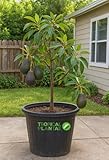
Ever admired a majestic avocado tree, laden with fruit, and wondered just how high it can reach? The allure of these tropical giants extends beyond their delicious bounty to their impressive stature.
Understanding the potential height of an avocado tree is crucial for gardeners, landscapers, and anyone planning to cultivate these rewarding plants. Whether you’re dreaming of a backyard orchard or simply curious about nature’s engineering, we’re about to explore the fascinating world of avocado tree growth.
Understanding Avocado Tree Growth Factors
The question of ‘how tall can an avocado tree grow?’ isn’t a simple one-size-fits-all answer. Several key factors influence the ultimate height of these magnificent trees, turning a potentially modest shrub into a towering specimen. Let’s break down what makes an avocado tree reach its full potential.
Genetics: The Blueprint for Height
At the heart of every avocado tree’s growth lies its genetic makeup. Different avocado varieties possess inherently different growth habits. Some are naturally dwarfed, while others are programmed to ascend towards the sky. This genetic predisposition is the most significant determinant of a tree’s maximum height. For instance, Hass avocados, while popular for their fruit, tend to be more compact than some of the older, heirloom varieties.
Understanding the specific cultivar you are planting is your first step in predicting its eventual size. Researching the ‘growth habit’ or ‘mature size’ of your chosen variety will give you a strong indication of what to expect. Some varieties are bred for commercial orchards where controlled environments and pruning keep them manageable, but their natural inclination might be much grander.
Rootstock: The Foundation of Growth
For grafted avocado trees, which are most commonly planted, the rootstock plays a pivotal role in managing tree height. Avocado trees are typically grafted, meaning a scion (the fruiting part) from a desired variety is joined to the root system (rootstock) of another. The rootstock acts as the foundation and can significantly influence the vigor and ultimate size of the grafted tree.
Dwarfing rootstocks are specifically developed and used to control tree size, making them ideal for smaller gardens or intensive planting systems. These rootstocks can limit the tree’s height by as much as 30-50% compared to if it were grown on its own roots or a more vigorous rootstock. Conversely, vigorous rootstocks will encourage larger, taller trees.
Common Rootstock Influences
- Dwarfing Rootstocks: These are designed to produce smaller trees, often remaining under 15 feet (4.5 meters). They are excellent for container growing or tight spaces.
- Semi-Dwarfing Rootstocks: These offer a moderate size, typically reaching 20-25 feet (6-7.5 meters).
- Vigorous Rootstocks: These promote the largest, tallest trees, with potential heights exceeding 30 feet (9 meters) and sometimes much more.
Environmental Conditions: Nurturing the Giant
Beyond genetics and rootstock, the environment in which an avocado tree is grown plays a critical role in its development and, consequently, its height. Think of it as providing the ideal conditions for a plant to thrive and express its full genetic potential.
Climate and Temperature
Avocado trees are subtropical plants that thrive in warm climates with mild winters. Consistent warmth and protection from frost are essential for healthy, vigorous growth. Trees in regions with ideal climates will naturally grow taller and more robustly than those struggling in cooler or more extreme conditions.
Frost damage can stunt a young tree’s growth for years, forcing it to regrow from damaged branches. Prolonged periods of cold can also slow down metabolic processes, hindering the tree’s ability to reach its full vertical potential. (See Also: Elden Ring How to Beat Draconic Tree Sentinel)
Sunlight and Light Exposure
Like most fruit-bearing trees, avocado trees require ample sunlight to photosynthesize effectively and fuel their growth. A location that receives at least six to eight hours of direct sunlight per day is optimal. Insufficient light can lead to leggy, weak growth and a smaller overall tree.
The intensity and duration of sunlight also contribute to the tree’s ability to produce energy for growth. In regions with abundant sunshine, trees are more likely to achieve their maximum height.
Soil Quality and Drainage
The soil is the anchor and nutrient source for any tree, and avocado trees are no exception. They prefer well-draining, slightly acidic to neutral soil. Poorly draining soil can lead to root rot, a common killer of avocado trees, severely limiting their growth and lifespan.
Nutrient-rich soil provides the building blocks for robust growth. While avocado trees can tolerate a range of soil types, those grown in fertile, loamy soil with good aeration will undoubtedly grow taller and healthier than those in compacted, nutrient-poor earth.
Water Availability
Consistent and adequate watering is vital, especially during the tree’s establishment phase and during dry spells. However, avocado trees are susceptible to root rot, so overwatering is just as detrimental as underwatering. Finding the right balance is key.
Proper irrigation allows the roots to access essential nutrients and moisture, supporting the upward growth of the tree. Drought stress, conversely, will cause the tree to conserve energy, often leading to stunted growth.
Pruning and Training: Shaping the Future
While some might think pruning only keeps trees small, strategic pruning can actually encourage healthier, stronger growth and, in some cases, contribute to a taller, more structurally sound tree over time. However, it’s a delicate balance.
Improper or excessive pruning, especially of young trees, can significantly stunt their growth. Conversely, selective pruning can remove weak or crossing branches, allowing the tree to focus its energy on upward development and the formation of a strong central leader.
The Role of Pruning
- Central Leader Training: For maximizing height, encouraging a strong central leader (the main vertical stem) is crucial. Pruning can help maintain this dominant stem.
- Removing Competing Leaders: If multiple strong vertical stems emerge, pruning can help select the strongest one to continue as the main leader.
- Structural Pruning: Removing lower branches too early can sometimes be detrimental to trunk development and overall height potential.
Typical Height Ranges for Avocado Trees
Given the multitude of influencing factors, it’s helpful to understand the general height ranges you can expect for different types of avocado trees. These are broad estimates, and individual trees may vary. (See Also: How Many Ornaments for 7ft Tree: A Complete Guide)
Dwarf Varieties
Dwarf avocado trees are specifically bred or grown on dwarfing rootstock to remain compact. These are excellent choices for smaller gardens, patios, or even for growing in large containers.
- Height: Typically range from 8 to 15 feet (2.4 to 4.5 meters).
- Fruit Production: Can still be very productive, often producing fruit earlier than larger varieties.
- Management: Easy to harvest fruit due to their accessible height.
Semi-Dwarf Varieties
These trees offer a compromise, providing a more substantial tree than dwarfs but still remaining more manageable than standard varieties.
- Height: Generally fall between 15 to 25 feet (4.5 to 7.5 meters).
- Fruit Production: Good yields, with fruit at a medium height for easier access.
- Management: Still relatively easy to prune and harvest, requiring less strenuous effort than full-sized trees.
Standard (full-Sized) Varieties
These are the classic avocado trees, capable of reaching significant heights when given the right conditions and left unpruned to their full genetic potential.
- Height: Can easily reach 30 to 50 feet (9 to 15 meters), and in ideal, unmanaged conditions, some can even exceed 60 feet (18 meters).
- Fruit Production: Often the most prolific producers, especially when mature.
- Management: Harvesting can become challenging as the trees grow taller, often requiring ladders or specialized equipment. Pruning is essential for managing their size in most home gardens.
Factors Influencing Maximum Height in Mature Trees
Once an avocado tree has reached maturity, its potential for further significant vertical growth might slow down, but its overall height is largely determined by the factors we’ve already discussed. However, certain conditions can either promote continued growth or lead to a plateau.
Long-Term Environmental Stability
Trees in stable, ideal environments – consistent temperatures, ample water, nutrient-rich soil, and plenty of sun – will continue to grow steadily throughout their lives, albeit at a slower rate than in their youth. These are the trees that will eventually push the boundaries of typical height expectations.
Absence of Major Stressors
Trees that have avoided major stressors like prolonged drought, severe frost, pest infestations, or diseases are more likely to maintain a growth trajectory that leads to greater height. A tree constantly battling for survival will divert energy away from vertical growth.
Root System Health
The health and spread of the root system are directly proportional to the tree’s ability to support a tall canopy. A well-established, healthy root system can draw up sufficient water and nutrients to sustain a large, tall tree.
Natural Lifespan and Growth Cycles
Avocado trees can live for many decades, even over a century under optimal conditions. Their growth is not a sprint but a marathon. Over many years, a standard variety in a perfect environment can accumulate significant height.
Can You Control Avocado Tree Height?
Yes, you absolutely can control the height of your avocado tree, and for most home gardeners, it’s a necessary practice. The techniques primarily involve selecting the right variety and rootstock, and employing strategic pruning. (See Also: How Tall Does a Cedar Tree Grow? A Comprehensive Guide)
Choosing the Right Variety and Rootstock
As discussed, this is your first and most powerful tool for managing height. If you have limited space, opt for a dwarf or semi-dwarf variety on a dwarfing rootstock. If you have ample space and desire a majestic, towering tree, choose a standard variety on a vigorous rootstock.
The Art of Pruning
Pruning is arguably the most common method for controlling avocado tree height in gardens. Regular pruning helps maintain a desired size and shape, making harvesting and general maintenance easier.
When and How to Prune
- Timing: The best time to prune is typically after the harvest season, usually in late winter or early spring before the new growth spurt. Avoid heavy pruning during flowering or fruiting.
- Technique: When aiming to reduce height, prune back to a lateral branch that is growing outwards and downwards. This encourages the tree to grow wider rather than taller. For maintaining a central leader, prune away competing upright branches.
- Consideration: Be aware that heavy pruning can sometimes reduce fruit production in the following season.
Girdling (a Cautionary Tale)
Girdling, the removal of a strip of bark around the trunk, is sometimes used in commercial agriculture to manage tree size and encourage fruiting. However, it is a stressful practice that can damage or kill the tree if not done correctly. It is generally not recommended for home gardeners due to the high risk of permanent damage.
Container Growing
Growing avocado trees in containers is an excellent way to naturally limit their size. The root system is confined by the pot, which inherently restricts the overall growth of the tree. Dwarf varieties are particularly well-suited to this method.
The Sky’s the Limit? Real-World Examples
While general ranges are helpful, it’s interesting to consider what height avocado trees can achieve in optimal, unmanaged conditions. In their native subtropical habitats, or in regions with perfect climates and fertile soils, large, old avocado trees can become truly impressive specimens.
Imagine trees that have been growing for 50, 70, or even 100 years without significant intervention. These trees can develop massive trunks, sprawling canopies, and reach heights that might surprise you. While exact measurements are hard to come by for many wild or ancient trees, anecdotal evidence and photographs suggest that standard varieties can indeed exceed the commonly cited 50-foot mark.
These giants are a testament to the tree’s inherent vigor and its ability to thrive when all environmental conditions align. They are living monuments to nature’s capacity for growth and longevity.
Conclusion
The height an avocado tree can reach is a fascinating interplay of genetics, rootstock, and environmental factors. While dwarf varieties remain manageable at around 8-15 feet, standard varieties, under ideal conditions and with minimal pruning, can soar to 30-50 feet or even taller. Pruning and rootstock selection are your most effective tools for controlling size in a home garden, allowing you to enjoy the benefits of an avocado tree, regardless of your available space.
Recommended Products