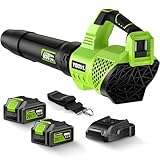
That powerful hum of a leaf blower is a familiar sound for many homeowners, especially during autumn. But have you ever stopped to wonder just how loud that machine is? We’re talking about decibels, the unit used to measure sound intensity. It’s a question that pops up frequently: ‘How many decibels is a leaf blower?’
The answer isn’t a simple one-size-fits-all number. The decibel level of a leaf blower can vary significantly based on several factors, from the type of blower to its power source and even how old it is. Understanding these variations is key to knowing what to expect and how to protect yourself and your neighbors from excessive noise pollution.
Understanding Leaf Blower Decibels: What You Need to Know
The question of ‘how many decibels is a leaf blower’ is a crucial one for anyone who owns or operates one, or lives near someone who does. Noise pollution from leaf blowers can be a significant nuisance, impacting not just our peace and quiet but also our hearing health. Let’s dive into the specifics of leaf blower noise levels, the factors that influence them, and what you can do about it.
What Are Decibels and Why Do They Matter?
Before we get into the specifics of leaf blowers, it’s important to understand what decibels (dB) are. Decibels are a logarithmic unit used to measure sound pressure level. This means that a small increase in decibels actually represents a much larger increase in sound intensity. For example, a 10 dB increase is perceived as twice as loud, while a 20 dB increase sounds four times as loud.
Why does this matter for leaf blowers? Because prolonged exposure to loud noises can cause permanent hearing damage. The Occupational Safety and Health Administration (OSHA) in the United States, for instance, has regulations regarding noise exposure. Generally, exposure to noise levels above 85 dB for extended periods can lead to hearing loss. Leaf blowers often operate well above this threshold.
The Range of Leaf Blower Decibel Levels
So, to directly address your question: how many decibels is a leaf blower? The range is quite broad. Most leaf blowers, when measured at a standard distance (often 50 feet, as per industry standards), typically fall between 60 dB and 100 dB. However, some powerful models, especially older or commercial-grade ones, can even push past 100 dB.
Let’s break this down with some comparisons:
- A normal conversation is around 60 dB.
- A vacuum cleaner is typically around 70-80 dB.
- A car horn at 25 feet is about 110 dB.
- A rock concert can reach 120 dB.
As you can see, even the lower end of the leaf blower spectrum is comparable to a loud household appliance, while the higher end approaches sounds that can be immediately damaging with short exposure. (See Also: How Much To Replace A Blower Motor In A Car )
Factors Influencing Leaf Blower Decibel Levels
Several key factors contribute to the overall noise output of a leaf blower. Understanding these can help you choose a quieter model or identify why your current blower is particularly loud.
1. Type of Leaf Blower
The most significant factor influencing decibel levels is the type of leaf blower:
- Gas-Powered Leaf Blowers: These are generally the loudest. The combustion engine, combined with the high-speed fan, creates a significant amount of noise. They can easily range from 80 dB to 100 dB or more at the operator’s ear. Commercial-grade gas blowers are often the most powerful and, consequently, the loudest.
- Electric Corded Leaf Blowers: These are typically quieter than their gas counterparts. They usually operate in the range of 60 dB to 80 dB. The motor is less powerful, and there’s no combustion engine to add to the noise.
- Battery-Powered (Cordless) Leaf Blowers: These have become increasingly popular and offer a good balance between power and noise reduction. Their decibel levels often fall between 65 dB and 90 dB. Newer models, especially those with advanced battery technology and motor design, are becoming remarkably quiet.
2. Power and Engine Size
For gas-powered blowers, engine displacement (measured in cubic centimeters or cc) is a direct indicator of power and, usually, noise. Larger engines typically produce more airflow and thus more noise. Similarly, for electric blowers, higher wattage or amperage usually means more power and potentially more decibels.
3. Airflow (cfm) and Airspeed (mph)
Leaf blowers are rated by their cubic feet per minute (CFM) and miles per hour (MPH). While higher CFM and MPH mean more effective leaf blowing, they also generally correlate with higher noise levels. A blower designed to move a massive amount of air at high speed will inherently be louder than one designed for lighter tasks.
4. Age and Maintenance
An older leaf blower, especially a gas model, might become louder over time due to wear and tear on its engine components and mufflers. Poor maintenance, such as a clogged air filter or a worn-out muffler, can also increase noise output. A well-maintained blower will generally operate closer to its advertised decibel rating.
5. Design and Muffler Technology
Manufacturers are increasingly focusing on reducing noise levels. Newer models, particularly high-end electric and battery-powered ones, incorporate advanced motor designs and sophisticated muffler systems (for gas models) to dampen sound. Look for models that explicitly advertise ‘low noise’ or ‘quiet operation’.
6. Distance From the Source
It’s crucial to remember that decibel levels decrease with distance. The figures often quoted (like 50 feet) are standardized measurements. At the operator’s ear, the decibel level will be significantly higher than at 50 feet away. For example, a blower rated at 90 dB at 50 feet might be 100 dB or more right next to the engine. (See Also: How To Replace Blower Motor Resistor Connector )
Hearing Protection: A Non-Negotiable Necessity
Given that many leaf blowers operate at levels that can damage hearing, wearing hearing protection is absolutely essential. We’re not just talking about a minor inconvenience; prolonged exposure to sounds above 85 dB can cause irreversible damage.
What kind of hearing protection should you use?
- Earplugs: These are inserted into the ear canal and can reduce noise levels by 20-30 dB.
- Earmuffs: These fit over the entire ear and typically offer higher levels of noise reduction, often 20-30 dB or more.
For leaf blower operation, earmuffs generally provide superior protection. Many professional landscapers wear specialized hearing protection that integrates with communication systems, highlighting the importance of this gear.
Local Regulations and Community Impact
The noise from leaf blowers can be a major source of conflict in residential areas. Many communities have implemented noise ordinances that restrict the hours during which leaf blowers can be operated. Some cities have even gone further, banning or restricting the use of gas-powered leaf blowers altogether due to their noise and environmental impact.
When considering purchasing a leaf blower, it’s wise to check your local regulations. You might find that certain types or models are preferred or even mandated.
Choosing a Quieter Leaf Blower
If you’re in the market for a new leaf blower and noise is a concern, here’s what to look for:
- Opt for Electric or Battery-Powered: As discussed, these are generally quieter than gas models.
- Check the Decibel Rating: Manufacturers often list the dB level, though it’s important to know at what distance this measurement was taken (ideally 50 feet). Look for models with ratings below 80 dB for personal use, and even lower if possible.
- Read Reviews: User reviews often provide real-world insights into how loud a particular model is.
- Consider CFM vs. Noise: While high CFM is good for efficiency, a blower with a slightly lower CFM but better noise-reduction technology might be a better choice for residential use.
The Environmental Aspect of Leaf Blower Noise
Beyond the direct impact on hearing, the constant drone of leaf blowers contributes to overall noise pollution, which has been linked to stress, sleep disturbances, and other health issues. Gas-powered leaf blowers also contribute to air pollution through exhaust emissions. This has led to a growing movement towards quieter, more environmentally friendly alternatives like electric blowers, rakes, and even mulching services that leave leaves in place. (See Also: How To Start A John Deere Snow Blower )
A Table of Typical Decibel Levels
Here’s a simplified table to give you a quick reference:
| Sound Source | Typical Decibel Level (dB) | Impact |
|---|---|---|
| Whisper | 20-30 | Very Quiet |
| Normal Conversation | 60 | Moderate |
| Vacuum Cleaner | 70-80 | Loud |
| Electric Leaf Blower (Corded) | 60-80 | Can be loud, but generally manageable |
| Battery-Powered Leaf Blower | 65-90 | Varies, but often quieter than gas |
| Gas-Powered Leaf Blower | 80-100+ | Very Loud, requires hearing protection |
| Motorcycle (nearby) | 95 | Extremely Loud |
| Chainsaw | 110 | Painful, immediate damage risk |
Remember, these are approximate figures. The actual decibel level you experience can depend on your specific model, how you use it, and your proximity to the machine.
The Future of Leaf Blowers: Quieter and Greener
The trend in the industry is clear: manufacturers are investing in technology to reduce noise and emissions. We’re seeing more powerful and efficient battery-powered models that can rival their gas counterparts in performance while being significantly quieter. As battery technology advances, expect even greater improvements in this area. This shift is driven by consumer demand, environmental concerns, and increasingly strict local regulations.
When Is a Leaf Blower Too Loud?
The general consensus from health organizations is that sustained exposure to noise above 85 dB is harmful. Therefore, any leaf blower that consistently operates at or above this level, especially at the operator’s ear, can be considered ‘too loud’ from a health perspective. Beyond health, subjective loudness and community tolerance play a role. What one person finds acceptable, another might find unbearable, especially if it occurs frequently or at inconvenient times.
For residential use, aiming for models that stay below 80 dB at 50 feet is a good starting point. For professional use, where power is paramount, investing in high-quality hearing protection is non-negotiable.
Conclusion
So, how many decibels is a leaf blower? The answer spans a wide range, typically from 60 dB to over 100 dB, with gas-powered models being the loudest. Understanding these levels is vital for protecting your hearing; always use earplugs or earmuffs when operating any leaf blower, especially gas models.
Choosing a quieter electric or battery-powered blower, checking local noise ordinances, and maintaining your equipment can all help mitigate the noise impact on yourself and your neighbors.