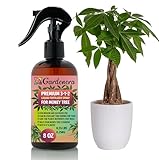
Dreaming of lush, green foliage and a touch of prosperity? The money tree, scientifically known as Pachira aquatica, is a popular choice for homes and offices, cherished for its attractive braided trunk and its symbolic association with good fortune.
But beyond its aesthetic and mystical appeal, this tropical native requires specific care to truly thrive. If you’ve recently acquired a money tree or are considering one, you might be wondering, “how do I care for a money tree?” Fear not! This comprehensive guide will equip you with all the knowledge you need to keep your money tree healthy, vibrant, and a beautiful addition to your space for years to come.
Understanding Your Money Tree’s Needs
Pachira aquatica hails from the swamps and riverbanks of Central and South America. This origin story is key to understanding its preferences. It loves warmth, humidity, and bright, indirect light, but it absolutely detests soggy roots. Mimicking its natural environment as closely as possible indoors will set you on the path to success.
Light Requirements: Bright, but Not Direct
Money trees are accustomed to dappled sunlight filtering through the canopy of larger trees in their native habitat. This translates to a preference for bright, indirect light indoors. Think of a spot near an east-facing window, or a few feet back from a south or west-facing window where the sun’s rays are softened.
- Ideal Placement: Near a bright window, but not in direct, harsh sunlight.
- Signs of Too Little Light: Leggy growth, smaller leaves, and a general lack of vigor. The braided trunks might even start to lean towards the light source.
- Signs of Too Much Light: Scorched or bleached-looking leaves, especially on the edges or tips.
- Artificial Light: If natural light is scarce, consider using a grow light. Full-spectrum LED grow lights are excellent options and can supplement natural light effectively. Aim for 12-16 hours of light per day.
Watering: The Art of Not Drowning
This is arguably the most crucial aspect of money tree care, and where many people go wrong. Overwatering is the number one killer of money trees. Their roots need air, and constantly wet soil leads to root rot, a fungal disease that is difficult to combat.
The key is to let the soil dry out between waterings. How often you water will depend on several factors: (See Also: How to Straighten a Tree After a Storm Safely)
- Pot Size and Material: Smaller pots dry out faster than larger ones. Terracotta pots breathe and allow moisture to evaporate more quickly than plastic or glazed ceramic pots.
- Environmental Conditions: Warmer temperatures, lower humidity, and increased airflow will cause the soil to dry out faster.
- Season: Money trees generally need less water in the cooler, darker months of fall and winter when their growth slows down.
The Finger Test: The most reliable method is to stick your finger about two inches into the soil. If it feels dry, it’s time to water. If you feel any moisture, wait longer.
Watering Technique: When you do water, water thoroughly. Pour water over the soil until it begins to drain from the drainage holes at the bottom of the pot. This ensures that the entire root ball is moistened. Discard any excess water that collects in the saucer after about 30 minutes. Never let the plant sit in standing water.
Water Type: Money trees can be sensitive to the chemicals found in tap water, such as chlorine and fluoride. If your tap water is heavily treated, consider using filtered water, distilled water, or rainwater. If you must use tap water, let it sit out for 24 hours before using it to allow some of the chlorine to dissipate.
Soil: Well-Draining Is Non-Negotiable
As mentioned, soggy roots are a death sentence. Therefore, the soil mix you use for your money tree is critical. It needs to be well-draining to prevent waterlogging.
- Recommended Mix: A good starting point is a standard potting mix amended with perlite or coarse sand. A ratio of 2 parts potting mix to 1 part perlite or sand works well.
- Cactus/Succulent Mix: Many gardeners find success using a pre-made cactus or succulent potting mix, as these are formulated for excellent drainage. You can further improve drainage by adding a bit more perlite.
- Avoid Heavy Soils: Garden soil or heavy potting soils that retain too much moisture should be avoided.
Temperature and Humidity: Tropical Comfort
Money trees are tropical plants and thrive in warmth and humidity. They are happiest in temperatures between 65°F and 80°F (18°C to 27°C). (See Also: How to Grow a Tea Tree: A Comprehensive Guide)
- Avoid Drafts: Keep your money tree away from cold drafts from windows or doors, and also away from heat vents or radiators, which can dry out the air and stress the plant.
- Humidity: While they can tolerate average household humidity, they will flourish with higher levels. If your home is particularly dry, especially in winter, consider these methods to increase humidity:
- Pebble Tray: Place the pot on a tray filled with pebbles and water. As the water evaporates, it will increase the humidity around the plant. Ensure the bottom of the pot does not sit directly in the water.
- Misting: Lightly misting the leaves occasionally can provide a temporary boost in humidity. However, be cautious not to mist too often, as prolonged wetness on leaves can encourage fungal issues.
- Humidifier: Using a room humidifier is the most effective way to consistently raise humidity levels.
- Grouping Plants: Grouping your money tree with other plants can also create a more humid microclimate.
Fertilizing: A Little Goes a Long Way
Money trees are not heavy feeders. Over-fertilizing can actually cause more harm than good, leading to salt buildup in the soil and potential root damage.
- When to Fertilize: Fertilize only during the active growing season, which is typically from spring through summer. Avoid fertilizing in fall and winter when the plant’s growth naturally slows down.
- Type of Fertilizer: Use a balanced, water-soluble houseplant fertilizer. Look for a N-P-K ratio like 10-10-10 or similar.
- Dilution: It’s always better to err on the side of caution. Dilute the fertilizer to half or even quarter strength recommended on the packaging.
- Frequency: Fertilize once every 4-6 weeks during the growing season.
- Signs of Over-fertilizing: Brown leaf tips or edges, wilting, or stunted growth. If you suspect over-fertilizing, flush the soil with plain water to wash away excess salts.
Pruning: Shaping and Encouraging Growth
Pruning is essential for maintaining the shape of your money tree, encouraging bushier growth, and removing any dead or damaged branches. It also helps to keep the braided trunks looking neat.
- When to Prune: The best time to prune is in the spring or early summer, at the beginning of the active growing season. However, you can prune at any time of year to remove dead or diseased growth.
- How to Prune: Use clean, sharp pruning shears or scissors. Cut just above a leaf node or a bud. This encourages new growth to emerge from that point.
- Shaping: You can trim back leggy branches to encourage a more compact and full appearance. If the braided trunks are becoming uneven, you can prune back the taller ones to match.
- Removing Dead/Yellow Leaves: Regularly inspect your plant for any yellowing or dead leaves and prune them off at the base.
Repotting: Giving Your Tree Room to Grow
Money trees are relatively slow-growing, so they don’t need to be repotted very frequently. Over time, however, they will outgrow their current container.
- Signs it’s Time to Repot:
- Roots are growing out of the drainage holes.
- The plant dries out very quickly, even after watering.
- Growth has significantly slowed or stopped.
- The plant seems top-heavy and unstable.
- When to Repot: The best time to repot is in the spring, at the start of the growing season.
- Pot Size: Choose a pot that is only one or two inches larger in diameter than the current pot. Repotting into a pot that is too large can lead to overwatering issues.
- Repotting Process: Gently remove the money tree from its old pot. Inspect the roots and trim away any that are dead or mushy. Place a layer of fresh, well-draining potting mix in the bottom of the new pot. Position the plant in the new pot, ensuring the top of the root ball is about an inch below the rim. Fill in around the roots with more potting mix, gently firming it down. Water thoroughly after repotting.
Common Problems and How to Solve Them
Even with the best care, you might encounter a few issues. Here are some common money tree problems and their solutions:
| Problem | Cause | Solution |
|---|---|---|
| Yellowing Leaves | Overwatering, underwatering, poor drainage, nutrient deficiency. | Check soil moisture. Ensure good drainage. Water only when the top 2 inches of soil are dry. Fertilize sparingly during the growing season if other factors are ruled out. |
| Drooping Leaves | Underwatering, overwatering, sudden temperature changes, transplant shock. | Check soil moisture. Adjust watering schedule. Ensure consistent temperature. Allow recovery after repotting. |
| Brown Leaf Tips/Edges | Low humidity, excessive fertilizer, too much direct sunlight, mineral buildup from tap water. | Increase humidity. Fertilize less often and dilute more. Move plant away from direct sun. Use filtered or distilled water. Flush soil if over-fertilized. |
| Leaf Drop | Sudden changes in environment (light, temperature, watering), overwatering, pests. | Maintain consistent conditions. Check for overwatering and adjust. Inspect for pests. |
| Pests (e.g., Spider Mites, Mealybugs) | Infestation from other plants or environment. | Isolate the plant. Wipe leaves with a damp cloth or use insecticidal soap. Repeat treatments as needed. |
| Mushy Trunk or Roots | Root rot due to overwatering and poor drainage. | This is serious. Remove plant from pot, trim away all affected mushy parts (trunk and roots) with a clean knife. Repot in fresh, well-draining soil and water very sparingly. Often difficult to recover from severe cases. Prevention is key. |
The Braided Trunk: Special Considerations
Many money trees are sold with their trunks braided together. This is a cosmetic feature that requires a little attention to maintain its appearance and health. (See Also: How to Take Tree Sap Off a Car: A Complete Guide)
- Tying: As the tree grows, the individual braided trunks can become tighter or looser. You may need to gently adjust the ties if they are constricting growth. Avoid tying too tightly.
- Watering Braids: Sometimes, water can get trapped between the braided trunks, leading to rot. Ensure good airflow around the base and allow the soil to dry out thoroughly. If you notice any signs of decay on the braided sections, gently untangle them and allow them to dry completely before re-braiding loosely or allowing them to grow individually.
- Pruning for Uniformity: If one braided trunk grows significantly faster than others, you can prune it back to maintain a more uniform appearance.
Toxicity to Pets
For those with furry friends, it’s important to know that money trees are generally considered non-toxic to cats and dogs, according to the ASPCA. However, it’s always wise to supervise pets around any houseplant to prevent them from chewing on leaves, as even non-toxic plants can cause mild stomach upset if ingested in large quantities.
Conclusion
Caring for a money tree is a rewarding experience that combines aesthetic beauty with the satisfaction of nurturing a thriving plant. By understanding its needs for bright, indirect light, well-draining soil, and a careful watering schedule, you can prevent common issues like root rot and leaf drop. Regular, light feeding during the growing season, coupled with occasional pruning for shape and health, will ensure your money tree remains a vibrant and prosperous addition to your home or office. Embrace these simple yet effective practices, and your Pachira aquatica will flourish, bringing a touch of tropical elegance and good fortune.
Recommended Products