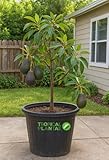
Dreaming of a lush, green oasis in your backyard, complete with your own homegrown avocados? It’s a fantastic aspiration! Many home gardeners ponder the potential size of these tropical delights. The thought of harvesting those creamy, delicious fruits right from your own tree is incredibly appealing.
But before you start planning your avocado orchard, it’s crucial to understand just how big these trees can get. Their mature size can significantly impact where you plant them, how much space you’ll need, and what kind of care they might require. This knowledge is the first step to a successful and fruitful avocado-growing experience.
Understanding Avocado Tree Growth: More Than Just a Fruit
When you think about how big an avocado tree grows, it’s not just about the height and spread. It’s about understanding the factors that influence this growth, the different varieties available, and how you can manage their size to suit your garden. An avocado tree is a significant investment of space and time, so getting the details right from the start is paramount.
Factors Influencing Avocado Tree Size
Several key elements dictate the ultimate size an avocado tree will reach. Understanding these will help you set realistic expectations and make informed decisions about planting and care.
Variety Matters: The Root of the Size Difference
This is arguably the most significant factor. Avocado varieties (cultivars) are bred for different characteristics, including their mature size. Some are naturally dwarf or semi-dwarf, while others are vigorous growers that can become true giants.
- Dwarf Varieties: These are often grafted onto dwarfing rootstock. They are ideal for smaller gardens, containers, or even indoor growing. Expect them to reach heights of 8-15 feet (2.4-4.6 meters) and a similar spread.
- Semi-Dwarf Varieties: These offer a compromise, growing larger than dwarfs but still manageable. They typically top out between 15-25 feet (4.6-7.6 meters) with a spread of 10-20 feet (3-6 meters).
- Standard/Full-Size Varieties: These are the ‘old-school’ trees, capable of reaching impressive heights and widths. Without pruning, they can easily grow 30-60 feet (9-18 meters) tall and spread just as wide. Some can even exceed 80 feet (24 meters) in ideal conditions over many decades.
Rootstock: The Foundation of Your Tree
For many commercially grown and home garden varieties, the scion (the part of the tree that produces the fruit) is grafted onto a rootstock. The rootstock plays a crucial role in controlling the tree’s vigor and ultimate size. Dwarfing rootstocks are specifically chosen to limit the tree’s growth.
Climate and Growing Conditions
Avocado trees thrive in specific climates, typically subtropical and Mediterranean zones. Within these zones, several conditions influence growth:
- Temperature: Consistent warm temperatures (but not extreme heat) encourage steady growth. Frost can stunt or even kill young trees, significantly impacting their potential size.
- Sunlight: Avocado trees need plenty of sunlight, at least 6-8 hours per day, to photosynthesize effectively and grow robustly.
- Soil: Well-draining soil is critical. Waterlogged roots lead to disease and poor growth. Nutrient-rich soil supports healthier, more vigorous development.
- Water Availability: While avocados are somewhat drought-tolerant once established, consistent watering, especially during dry periods and fruit development, fuels better growth.
- Wind Exposure: Strong winds can damage branches, stunt growth, and reduce fruit set. Planting in a sheltered location or providing windbreaks can help.
Age and Maturity
Like any plant, an avocado tree grows gradually. It takes years for an avocado tree to reach its full potential size. A young tree might only be a few feet tall, while a mature tree that’s decades old will be significantly larger. Expect significant growth spurts in its early to middle years. (See Also: How to Check Family Tree Online: Your Guide)
Common Avocado Varieties and Their Expected Sizes
Let’s look at some popular avocado varieties and what you can generally expect in terms of their mature size. Remember, these are estimates, and your specific conditions will play a role.
Hass Avocado
The most widely recognized avocado, Hass, is a vigorous grower. In its natural, unpruned state, a Hass tree can reach heights of 20-30 feet (6-9 meters) and spread 15-25 feet (4.6-7.6 meters). However, it is often grafted onto rootstock that can influence its size. With regular pruning, you can keep a Hass tree much smaller, around 10-15 feet (3-4.6 meters).
Fuerte Avocado
Fuerte is another popular variety known for its smooth, buttery flesh. Fuerte trees tend to be more spreading and less upright than Hass. They can grow to 20-30 feet (6-9 meters) tall and have a spread of 20-30 feet (6-9 meters). They are also responsive to pruning.
Reed Avocado
The Reed avocado is known for its large, round fruit and is a more compact grower compared to Hass or Fuerte. A mature Reed tree typically reaches 10-15 feet (3-4.6 meters) in height and a similar spread. This makes it a good candidate for smaller gardens.
Bacon Avocado
Bacon avocados are a good choice for cooler subtropical areas. This variety is a moderately vigorous tree, usually growing to around 15-20 feet (4.6-6 meters) tall with a spread of 10-15 feet (3-4.6 meters).
Zutano Avocado
Zutano trees are often quite vigorous and can grow tall. Expect them to reach 20-30 feet (6-9 meters) in height with a spread of 15-20 feet (4.6-6 meters).
Mexicola Grande Avocado
This is a more cold-hardy variety originating from Mexico. Mexicola Grande trees are known for their vigorous growth and can become quite large, often reaching 30-40 feet (9-12 meters) in height and a similar spread, sometimes even more in ideal conditions. (See Also: How to Grow a Pomegranate Tree From Seeds: A Detailed…)
Little Cado (tiny Avocado)
As the name suggests, this is a specifically bred dwarf variety. The Little Cado is designed for container growing or very small spaces and typically stays around 6-10 feet (1.8-3 meters) tall and 3-5 feet (0.9-1.5 meters) wide. It produces small, but tasty, avocados.
Managing Avocado Tree Size: Pruning and Training
Even if you choose a standard variety, you don’t have to let your avocado tree grow into a towering behemoth. Pruning is your most powerful tool for managing size and shape.
Why Prune?
- Size Control: Keep the tree at a manageable height for harvesting and maintenance.
- Shape: Encourage a more open, productive structure, allowing sunlight to penetrate the canopy.
- Health: Remove dead, diseased, or crossing branches to improve air circulation and prevent disease spread.
- Fruit Production: Strategic pruning can sometimes encourage more fruit set by stimulating new growth.
When to Prune
The best time to prune avocado trees is typically after the harvest season, usually in late winter or early spring before the new growth flush. Avoid heavy pruning during the hottest parts of summer or when there’s a risk of frost.
How to Prune
- For Size Reduction: Prune back branches to a strong lateral branch or bud that is facing outwards. Avoid ‘topping’ the tree, which creates a weak, bushy growth.
- For Shape: Remove branches that are growing inwards, crossing others, or are too low. Aim for a balanced, open canopy.
- Young Trees: Initial pruning of young trees focuses on establishing a strong central leader and scaffold branches.
It’s important to note that heavy pruning can temporarily reduce fruit production. However, for most home gardeners, maintaining a manageable tree size is more important than maximizing every single fruit.
Container Growing: The Ultimate Size Control
If you have very limited space, or if you live in a climate that isn’t ideal for year-round avocado growing, container growing is an excellent option. By selecting a dwarf variety and keeping the tree in a pot, you have complete control over its size.
Choosing the Right Pot
Start with a pot that is at least 10-15 gallons (38-57 liters) for a young tree and progressively larger as the tree grows. Ensure the pot has excellent drainage holes.
Soil Mix
Use a well-draining potting mix, often a blend of compost, perlite, and peat moss. Avoid heavy garden soil, which can compact in a pot. (See Also: How to Climb a Tree with a Rope: Your Ultimate Guide)
Watering and Feeding
Container-grown trees will dry out faster and require more frequent watering than in-ground trees. Regular feeding with a balanced, slow-release fertilizer is also important to support growth in a limited soil volume.
Repotting
As the tree grows, you’ll need to repot it into a larger container every few years. This is also an opportunity to root prune, which helps to keep the tree’s size in check.
Avocado Tree Growth Rate: How Fast Do They Get Big?
The growth rate of an avocado tree can vary significantly. Generally, young trees grow faster than mature trees. In optimal conditions, a healthy avocado tree can grow 1-3 feet (0.3-0.9 meters) per year during its active growth phases.
- First few years: Growth might be slower as the tree establishes its root system.
- Young to mature trees (5-15 years): This is often when you’ll see the most rapid growth, with trees gaining significant height and spread.
- Mature trees (15+ years): Growth slows down considerably, and the tree focuses more on fruit production and maintaining its structure.
Again, variety, rootstock, climate, soil, water, and care all play a role in the growth rate. A dwarfing variety on dwarfing rootstock will naturally grow much slower than a vigorous standard variety.
The ‘giant’ Avocado Tree: What to Expect in Ideal Conditions
In regions with perfect avocado-growing climates (like parts of California, Mexico, or Australia) and with varieties that are not specifically bred for dwarfing, it’s not uncommon to see avocado trees reach truly impressive sizes. Over 50-70 years, these trees can become majestic specimens, often exceeding 50 feet (15 meters) in height and spreading just as wide. Their canopies can provide significant shade, and their massive root systems anchor them firmly.
These large trees are a testament to the potential of the species when given ample space, nutrients, water, and time. However, for the average home gardener, managing a tree of this magnitude requires considerable effort, including specialized equipment for harvesting and pruning. This is why choosing the right variety and understanding management techniques is so important for most backyard growers.
Conclusion
Understanding how big an avocado tree grows is essential for successful gardening. Factors like variety, rootstock, climate, and care all contribute to its final size. Dwarf varieties can be kept to 8-15 feet, semi-dwarfs to 15-25 feet, while standard trees can reach 30-60 feet or more. With careful selection and consistent pruning, you can manage your avocado tree’s size effectively, ensuring it fits beautifully into your landscape and provides delicious fruit for years to come.
Recommended Products