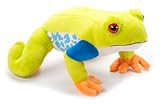
The vibrant and captivating Red-Eyed Tree Frog (Agalychnis callidryas) is a jewel of the rainforest canopy. With their striking emerald bodies, electric blue and orange flanks, and those iconic, alarmingly large red eyes, they capture the imagination of amphibian enthusiasts worldwide.
But beyond their dazzling appearance, a common question arises for those considering these fascinating creatures as pets or simply admiring them in their natural habitat: just how big do red eyed tree frogs get? Understanding their adult size is crucial for proper care, enclosure planning, and appreciating their place in the ecosystem.
Unveiling the Size of Red-Eyed Tree Frogs
When we talk about the size of Red-Eyed Tree Frogs, we’re generally referring to their snout-to-vent length (SVL). This measurement is taken from the tip of the frog’s nose (snout) to the vent, which is the opening for waste expulsion. It’s the standard way herpetologists and keepers measure frogs. Unlike some animals that grow continuously, frogs reach a mature size and then their growth significantly slows down.
Factors Influencing Red-Eyed Tree Frog Size
Several factors can influence the ultimate size a Red-Eyed Tree Frog achieves. While genetics plays a role, environmental conditions are paramount in determining whether a frog reaches its full potential.
Diet and Nutrition
Perhaps the most significant factor influencing a Red-Eyed Tree Frog’s size is its diet. In the wild, these frogs are opportunistic insectivores, feasting on a variety of flying and crawling insects. Their diet typically includes:
- Fruit flies
- Crickets (appropriate size)
- Moths
- Butterflies
- Small beetles
- Other small invertebrates
For captive Red-Eyed Tree Frogs, providing a varied and nutritionally complete diet is essential. Gut-loaded insects dusted with calcium and vitamin supplements are vital. A diet lacking in essential nutrients can stunt growth, leading to smaller-than-average adults. Conversely, a well-fed frog will develop to its genetically predetermined size.
Genetics
Just like in any species, individual Red-Eyed Tree Frogs possess different genetic predispositions for growth. Some frogs, even with ideal conditions, may naturally be a bit smaller or larger than others. Selective breeding in captivity can sometimes lead to variations in size, though the overall species range remains consistent.
Environmental Conditions (temperature, Humidity, Space)
The environment in which a Red-Eyed Tree Frog lives plays a critical role in its health and growth. Maintaining proper temperature gradients, high humidity levels, and providing adequate space within an enclosure are all important.
- Temperature: Red-Eyed Tree Frogs thrive in warm, humid conditions. Temperatures that are too low can slow down their metabolism and hinder growth. A typical temperature range for their enclosure is between 75-85°F (24-29°C) during the day, with a slight drop at night.
- Humidity: High humidity (70-100%) is crucial for their skin health and overall well-being. Dehydration can stress a frog and impede growth. Regular misting and a well-maintained substrate are key.
- Space: While they are arboreal and spend most of their time climbing, providing a sufficiently tall enclosure allows them to exhibit natural behaviors and reduces stress, which can indirectly support healthy growth.
Age and Maturity
Young Red-Eyed Tree Frogs are significantly smaller than adults. They undergo a period of rapid growth after metamorphosing from tadpoles. It takes time for them to reach their full adult size, typically within 1-2 years. (See Also: How Much to Remove Dead Tree: Costs & Factors)
Typical Adult Size of Red-Eyed Tree Frogs
Now, let’s get to the heart of the matter: how big do Red-Eyed Tree Frogs actually get? Generally, they are considered a small to medium-sized tree frog species.
Male vs. Female Size Differences
A notable characteristic of Red-Eyed Tree Frogs, like many anurans, is sexual dimorphism, meaning there are distinct physical differences between males and females. In this species, females are typically larger and more robust than males.
- Females: Adult female Red-Eyed Tree Frogs usually reach a snout-to-vent length (SVL) of approximately 2.5 to 3 inches (6.4 to 7.6 cm). Some individuals might slightly exceed this, but it’s uncommon to find females much larger than 3 inches.
- Males: Adult male Red-Eyed Tree Frogs are considerably smaller, typically measuring around 1.5 to 2 inches (3.8 to 5.1 cm) SVL. Their bodies are more slender compared to the females.
This size difference is quite pronounced and is often one of the easiest ways to distinguish between sexes in adult frogs. The females’ larger size is often attributed to their role in egg production, requiring more body mass to develop and carry clutches of eggs.
Average Size Range
Considering both sexes, the overall adult size range for Red-Eyed Tree Frogs is generally between 1.5 and 3 inches (3.8 to 7.6 cm) SVL. When people ask “how big do red eyed tree frogs get?”, they are usually inquiring about this typical adult size.
It’s important to remember that these are averages. As mentioned, genetics, diet, and environmental factors can lead to slight variations. A frog that is consistently kept in suboptimal conditions might remain on the smaller end of this spectrum, while a well-cared-for specimen might reach the upper limit.
Growth Stages and Development
Understanding the growth stages can provide further context for their adult size.
From Tadpole to Froglet
The life cycle begins as an egg, which hatches into a tadpole. Tadpoles are aquatic and their development into froglets involves metamorphosis. During this stage, their size is dictated by the availability of food and water quality in their aquatic environment. A healthy metamorphosis is crucial for a strong start as a terrestrial frog.
Juvenile Stage
Once they metamorphose into froglets, they are tiny, often only about half an inch (1.2 cm) in size. This is the beginning of their terrestrial life. During their juvenile phase, they will grow rapidly, provided they have access to a consistent supply of appropriately sized food and a supportive environment. This rapid growth period is when they put on most of their size before reaching maturity. (See Also: Learn How to Do a Decision Tree: A Complete Guide)
Reaching Adulthood
Red-Eyed Tree Frogs are considered sexually mature and reach their adult size around 1 to 2 years of age. At this point, their growth significantly slows down, and they will maintain their size for the remainder of their lives, which can be 5-10 years or even longer in captivity with excellent care.
Implications for Captive Care
Knowing how big Red-Eyed Tree Frogs get has direct implications for anyone keeping them as pets.
Enclosure Size and Setup
For adult frogs, a tall terrarium is recommended. A minimum size for a pair of frogs is often suggested as a 12x12x18 inch (30x30x45 cm) enclosure, but larger is always better. A taller enclosure (e.g., 12x12x24 inches or 30x30x60 cm) allows for more vertical climbing space, which they utilize extensively. The size of the enclosure is more about providing adequate climbing and environmental complexity than just accommodating their small body mass.
The enclosure needs to be equipped with:
- Plenty of climbing opportunities: Branches, vines, and sturdy plants (live or artificial) are essential.
- Hiding spots: Frogs need places to feel secure, such as dense foliage or cork bark.
- Water dish: A clean, shallow water dish should always be available.
- Substrate: A moisture-retaining substrate like coconut fiber or sphagnum moss is ideal.
- Lighting and heating: Full-spectrum LED lighting for plants and a low-wattage heat source to maintain the correct temperature.
Feeding Appropriateness
The size of the prey items offered must be appropriate for the frog’s current size. Juvenile frogs will eat smaller insects like pinhead crickets and fruit flies. As they grow, they can be transitioned to larger crickets, roaches, and other appropriately sized insects. An adult frog can typically handle crickets up to its own body length. Overfeeding can lead to obesity, while underfeeding can cause stunted growth.
Handling and Stress
Red-Eyed Tree Frogs are not typically considered “handling” pets. Their delicate skin can be easily damaged by oils and residues on human hands, and they are easily stressed by frequent handling. Their small size means they are also quite agile and can easily leap away, potentially injuring themselves.
The stress from excessive handling can negatively impact their health and, consequently, their growth and overall well-being. It’s best to admire them visually and minimize direct contact.
Comparing Red-Eyed Tree Frogs to Other Amphibians
To put their size into perspective, it’s helpful to compare them to other popular frog species: (See Also: How Tall Is the Biggest Redwood Tree? Unveiling Giants)
| Frog Species | Typical Adult SVL Range (inches) | Typical Adult SVL Range (cm) | Notes |
|---|---|---|---|
| Red-Eyed Tree Frog | 1.5 – 3 | 3.8 – 7.6 | Females larger than males. |
| American Green Tree Frog | 1.5 – 2.25 | 3.8 – 5.7 | Similar in size to males. |
| Pacman Frog (Argentine) | 3 – 6 | 7.6 – 15.2 | Much larger and bulkier. |
| White’s Tree Frog (Dumpy) | 3 – 4.5 | 7.6 – 11.4 | Larger and more robust than Red-Eyed. |
| African Dwarf Frog | 1 – 1.75 | 2.5 – 4.4 | Much smaller, aquatic. |
As the table illustrates, Red-Eyed Tree Frogs fall into the smaller end of the spectrum compared to some other commonly kept tree frogs and are significantly smaller than terrestrial frogs like Pacman or White’s Tree Frogs. Their size makes them ideal for appropriately sized arboreal enclosures.
Common Misconceptions About Size
One common misconception is that all Red-Eyed Tree Frogs grow to be quite large. This is often fueled by images of particularly well-fed or slightly larger individuals, or confusion with other tree frog species. It’s important to remember the distinct size difference between males and females.
Another misconception is that they can grow indefinitely. Like most animals, they have a genetically determined adult size. While excellent care will help them reach their maximum potential, they will not continue to grow significantly beyond that point.
Observing Size in the Wild
In their natural rainforest habitat in Central and South America, Red-Eyed Tree Frogs are masters of camouflage, blending seamlessly with the lush foliage. Spotting them can be a challenge, and observing their size in the wild requires keen eyes and a bit of luck. They are primarily nocturnal, becoming most active after dusk.
Their arboreal lifestyle means they spend their lives in trees and on broad leaves, often near bodies of water where they breed. Their small size allows them to navigate the complex canopy with ease, preying on small insects and avoiding larger predators. The same factors influencing size in captivity—diet, genetics, and environmental conditions—also apply in the wild, though the variables can be much more unpredictable.
Conclusion
Red-Eyed Tree Frogs are a relatively small species of amphibian. Adult females typically reach 2.5 to 3 inches (6.4 to 7.6 cm) in snout-to-vent length, while males are smaller, usually between 1.5 to 2 inches (3.8 to 5.1 cm). Their final size is influenced by genetics, diet, and environmental factors, with optimal conditions allowing them to reach their full potential within these ranges. Understanding their modest adult size is key for providing appropriate care and appreciating these stunning rainforest inhabitants.
Recommended Products