So, you’ve got a tree that’s outgrown its welcome, or perhaps it’s become a hazard. You’re wondering, ‘How do I actually uproot a tree?’ It’s a common question, and while it might seem daunting, with the right approach and tools, it’s a manageable task. We’ll guide you through the entire process, from assessing the tree to the final removal of that stubborn root ball.
Whether it’s a small sapling or a more mature specimen, understanding the techniques and safety precautions is paramount. This isn’t just about brute force; it’s about strategy, leverage, and knowing when to call in the professionals. Let’s get started on making your space tree-free.
Planning Your Tree Uprooting Project
Before you even think about digging, a thorough plan is your best friend. Uprooting a tree isn’t a spur-of-the-moment activity. It requires careful consideration of several factors to ensure safety, efficiency, and environmental responsibility.
Assessing the Tree and Your Surroundings
The first step is to understand the tree itself. What is its species? How tall and wide is it? What is the diameter of the trunk at its base? These details will dictate the tools and techniques you’ll need.
Next, examine the surroundings. Are there any power lines nearby? Is there a fence, building, or other valuable structures close to the tree? The potential for the tree to fall in an uncontrolled manner is a significant risk, and you need to mitigate this.
Consider the soil type. Is it sandy and loose, or is it dense clay? This will affect how easily the roots can be loosened.
Determining the Best Method
The size and type of tree will heavily influence the method you choose. For very small trees or saplings, manual removal might be feasible. For larger trees, you’ll likely need mechanical assistance.
Key considerations for method selection:
- Tree Size: Small, medium, or large.
- Root System: Shallow and widespread, or deep and taproot-heavy.
- Accessibility: Can machinery reach the tree?
- Budget: Professional services can be costly.
- Your Physical Capability: This is not a task for the faint of heart or body.
Gathering the Right Tools and Equipment
Having the correct tools is crucial for both safety and effectiveness. Don’t skimp here; using the wrong tool can lead to injury or property damage.
Essential tools for manual uprooting:
- Shovel: A sturdy, pointed shovel for digging.
- Spade: A flat-edged spade for cutting roots.
- Mattock or Pickaxe: For breaking up tough soil and severing thicker roots.
- Pruning Saw or Loppers: For cutting smaller branches and exposed roots.
- Axe: For chopping through roots (use with extreme caution).
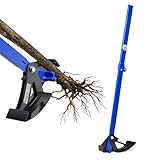
- Leverage Bar or Pry Bar: A long, strong bar to help lift and dislodge the root ball.
- Gloves: Heavy-duty work gloves to protect your hands.
- Safety Glasses: Essential to protect your eyes from flying debris.
- Sturdy Footwear: Steel-toed boots are highly recommended.
- Rope or Chains: For potentially pulling the tree over once loosened.
For larger trees, you might need:
- Chainsaw: For cutting the trunk and larger roots (requires expertise).
- Excavator or Backhoe: For heavy-duty root ball removal.
- Winch: For pulling the tree over.
Safety First!
This cannot be stressed enough. Uprooting a tree is inherently dangerous. Always prioritize safety:
- Never work alone. Have at least one other person present.
- Clear the area of children, pets, and anyone not involved.
- Be aware of overhead hazards like power lines or dead branches.
- Wear appropriate Personal Protective Equipment (PPE) at all times.
- If you have any doubt about your ability to safely remove the tree, hire a professional arborist.
Manual Uprooting: The Do-It-Yourself Approach
This method is generally suitable for smaller trees and shrubs. It’s labor-intensive but offers a sense of accomplishment. (See Also: How to Trim a Willow Tree: Shape & Health Guide)
Step 1: Prepare the Area and Trim Lower Branches
Clear away any debris, rocks, or obstacles around the base of the tree. This will give you ample working space. Using your pruning saw or loppers, trim off any low-hanging branches. This not only improves accessibility but also prevents them from getting in your way or causing injury during the process.
Step 2: Digging the Trench
Begin by digging a trench around the base of the tree. The width of the trench should be sufficient to allow you to work comfortably, typically about 1 to 2 feet wide. The depth will depend on the tree’s root system, but start by digging down about 1 to 2 feet. As you dig, try to sever any smaller roots you encounter with your shovel or spade.
The goal here is to expose the main root ball and create enough space to work with your leverage tools.
Step 3: Severing the Roots
This is where the real work begins. As you expose the roots, use your spade, mattock, or axe to cut through them. Start with the smaller, more accessible roots. For thicker roots, you might need to use a saw or a more forceful chopping motion with the mattock or axe. Be cautious when using an axe; always ensure a clear swing path and maintain balance.
Key tip: Try to cut roots as far away from the trunk as possible to give yourself more leverage. For particularly stubborn roots, you might need to dig deeper to get underneath them.
Step 4: Loosening the Root Ball
Once you’ve severed as many roots as you can reach, it’s time to start loosening the root ball. Use your leverage bar or pry bar to get under the root ball and apply upward pressure. Work your way around the base, prying in different spots to gradually dislodge the tree. You’ll likely feel resistance as the remaining roots strain.
Important: Be mindful of the direction the tree is leaning. You don’t want to accidentally pull it over in an uncontrolled manner.
Step 5: The Final Push (or Pull)
As the root ball becomes looser, you might be able to rock the tree back and forth. If you have a helper, you can both push or pull on the trunk to help free it. If the tree is leaning in a particular direction, you can use this to your advantage to help it fall away from you.
In some cases, you might need to tie a rope around the upper trunk and have someone pull on it from a safe distance as you continue to work on the roots. This can provide extra leverage to pull the tree down.
Step 6: Removing the Root Ball
Once the tree is free, it will likely come out with a significant portion of its root ball attached. Depending on the size, this can be very heavy. You might be able to roll it or drag it out of the hole. If it’s too heavy, you may need to break it apart further or use a wheelbarrow.
Step 7: Backfilling the Hole
After the tree and root ball are removed, you’ll be left with a large hole. Fill this in with the soil you removed, or bring in new topsoil. Compact the soil as you go to prevent settling.
Mechanical Assistance: For Larger Trees
When manual methods are simply not feasible due to the size of the tree, mechanical assistance becomes necessary. This often involves specialized equipment and a higher level of risk, making professional help highly recommended. (See Also: How Far Down Do Tree Roots Go? Unearthing the Truth!)
Using a Chainsaw (with Extreme Caution!)
For larger trees, a chainsaw might be used to cut through the trunk and exposed roots. This is a dangerous operation and should only be undertaken by individuals with proper training and experience in chainsaw use.
Process involves:
- Felling the tree first: This is a separate skill involving cutting a notch and a back cut to direct the fall.
- Cutting the trunk into manageable sections.
- Severing major roots: This is extremely hazardous as the root ball can shift unpredictably.
Warning: The risk of kickback, falling branches, and uncontrolled tree movement is significantly higher with chainsaw use. We strongly advise against using a chainsaw for uprooting unless you are a trained professional.
Hiring Professional Tree Removal Services
For most people dealing with mature or large trees, hiring a professional tree removal service is the safest and most efficient option. Arborists have the expertise, equipment, and insurance to handle these jobs.
What to expect from professionals:
- Site assessment: They’ll evaluate the tree, its surroundings, and potential risks.
- Tree felling: Safely bringing down the tree.
- Stump grinding or removal: They can grind the stump down to below ground level or excavate the entire root ball.
- Debris removal: Hauling away branches, trunk sections, and the root ball.
- Insurance: Reputable companies are insured against accidents and damage.
When to definitely call a professional:
- The tree is near power lines.
- The tree is close to your house or other structures.
- The tree is very large or diseased, making it unstable.
- You lack the necessary tools or physical strength.
- You are uncomfortable or unsure about any part of the process.
Dealing with Stubborn Roots and the Root Ball
Sometimes, even after extensive digging and cutting, the root ball can be incredibly resistant. Here are some tips for tackling those persistent roots:
Patience and Persistence
It’s easy to get frustrated, but patience is key. Keep working around the root ball, systematically severing any roots you find. Don’t try to force the tree out too early; you risk breaking the trunk or causing it to fall unexpectedly.
Leverage Techniques
When using a pry bar, try different angles and leverage points. Sometimes, a slight shift in where you apply pressure can make a big difference. If possible, have one person applying pressure with the pry bar while another tries to rock the tree.
Cutting Larger Roots
For roots that are too thick for a spade or saw, you might need to resort to an axe or a reciprocating saw with a suitable blade. Again, extreme caution is advised when using these tools.
Table: Root Thickness vs. Tool Recommendation
| Root Diameter | Recommended Tools |
|---|---|
| Up to 1 inch | Pruning saw, loppers |
| 1 to 3 inches | Spade, hand saw, small mattock |
| 3 to 6 inches | Mattock, axe, reciprocating saw (with wood blade) |
| Over 6 inches | Chainsaw (professional use only), heavy excavation equipment |
Dealing with Taproots
Some trees have a strong central taproot that anchors them deeply. These are the hardest to remove. You may need to dig very deep under the root ball to access and cut the taproot. This is often where mechanical excavation becomes more practical. (See Also: How to Grow a Moringa Tree: Your Ultimate Guide)
Post-Uprooting: Cleanup and Disposal
Once the tree and root ball are out, your job isn’t quite finished. Proper cleanup and disposal are essential.
Disposing of the Tree and Roots
Check your local regulations for tree and yard waste disposal. Options include:
- Municipal yard waste collection: Many areas have specific pickup days or drop-off sites.
- Wood chipper: You can rent one to chip branches and smaller roots, which can be used as mulch.
- Composting: Smaller pieces can be added to a compost pile.
- Firewood: If the wood is suitable, you can cut it into firewood.
- Professional hauling: Tree removal services will typically haul everything away.
Large root balls can be very difficult to dispose of. Some people leave them to decompose naturally, while others may need to arrange for special disposal or use them as a landscaping feature.
Filling and Reseeding the Hole
As mentioned earlier, fill the hole with soil. If you plan to reseed the area, consider adding some compost to enrich the soil. Tamp the soil down firmly to prevent excessive settling over time. You can then sow grass seed or plant something new.
Stump Removal Options
If you didn’t uproot the entire stump, you’ll have a remaining stump to deal with. Common options include:
- Stump Grinding: A machine grinds the stump into wood chips. This is often the most efficient and least disruptive method.
- Chemical Stump Removers: These products accelerate decomposition but take time.
- Manual Removal: For smaller stumps, you can continue digging and cutting roots.
- Burning: This is often restricted and can be dangerous.
When to Call an Arborist
We’ve mentioned it several times, but it bears repeating: knowing when to call a professional is crucial. An arborist is a tree care specialist who can assess risks and perform complex removals safely.
Signs you need an arborist:
- Proximity to hazards: Power lines, structures, or high-traffic areas.
- Tree health: Diseased, damaged, or dead trees are unpredictable.
- Size and complexity: Very large trees or those in difficult-to-access locations.
- Lack of experience or equipment: If you don’t have the right tools or knowledge.
- Legal requirements: Some areas have regulations regarding tree removal.
Investing in professional tree removal can save you time, effort, and potentially prevent costly accidents or property damage.
Verdict on Uprooting Trees
Uprooting a tree is a significant undertaking that requires careful planning, the right tools, and a strong emphasis on safety. For smaller trees, manual methods can be effective with persistence, but for larger specimens, professional help is often the wisest and safest choice. Always assess your capabilities and surroundings before beginning.
Recommended Products